The Truth About 1 Gallon Betta Fish Tanks (And What to Buy Instead for 2024)
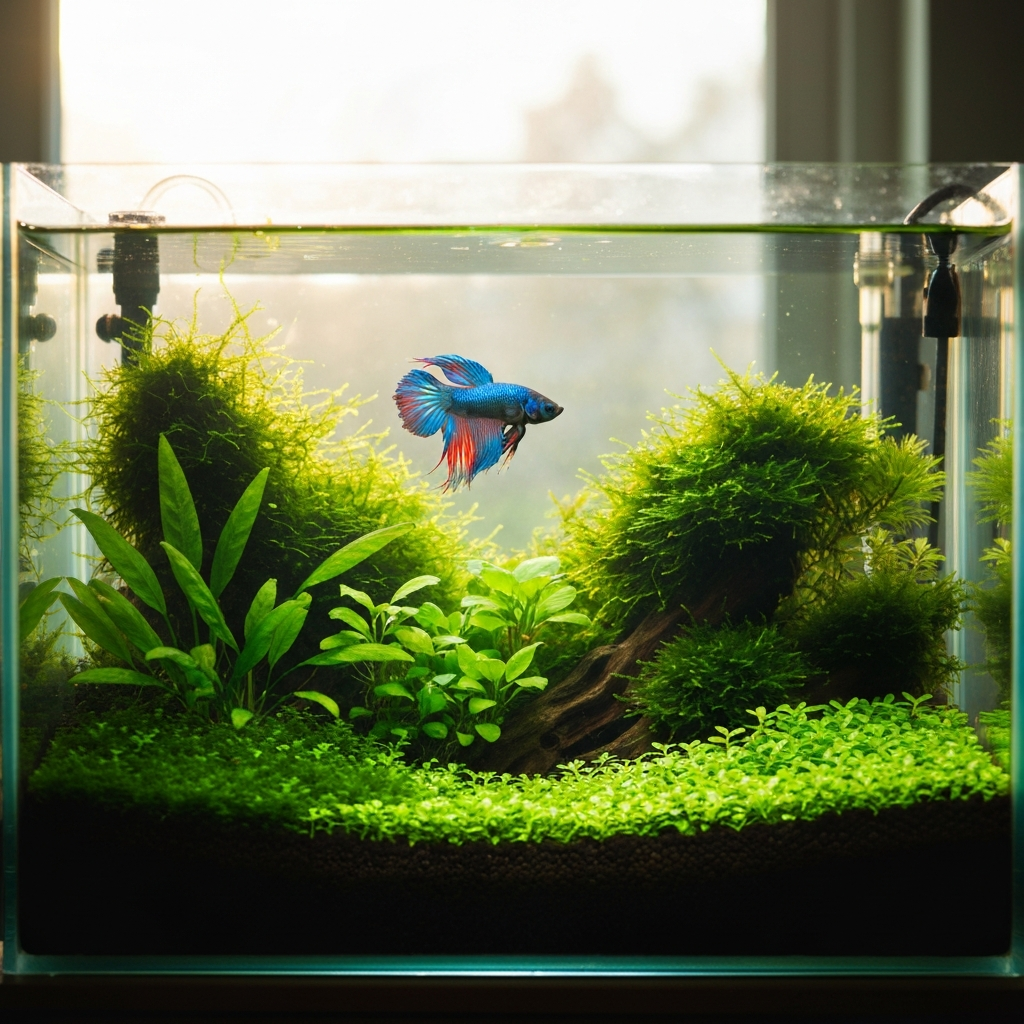
I still remember my first betta fish, a stunning royal blue veiltail I named Comet. Back in 2019, I was a total beginner, and I did what I thought was right: I went to a big-box pet store and bought the exact setup they recommended. It was a tiny, 1-gallon plastic "kit" with some colorful gravel and a fake plant. The box had a picture of a happy-looking betta on it, so I thought I was being a great fish parent. I was wrong. So, so wrong.
Within weeks, Comet was lethargic. His beautiful fins started to look ragged. I was constantly changing the water, but the tank was always cloudy and smelled faintly foul. I was stressed, and I knew he was suffering. That's when I fell down the rabbit hole of real, science-based fishkeeping and discovered the painful truth: the very tank I was sold as a "betta home" was the source of all his problems. It was a heartbreaking lesson, but it set me on the path to creating my blog, bettafishcare.xyz, to prevent others from making the same mistakes I did.
So, if you're here because you're searching for a "1 gallon betta fish tank," I'm glad you found me. I'm not going to scold you. I'm going to give you the honest, experience-backed truth that I wish someone had given me all those years ago.
The Hard Truth About 1-Gallon Betta Tanks
Let's just get this out of the way: A 1-gallon tank is not a suitable permanent home for a betta fish. It's not an opinion; it's a biological fact. Pet stores sell them because they are cheap, take up little shelf space, and are an easy impulse buy. They prioritize profit over the animal's welfare. Here’s why such a small volume of water is so dangerous for your fish.
1. Unstable Water Parameters
Think of a tiny cup of coffee versus a large pot. The small cup gets cold in minutes, right? The same principle applies to aquarium water. In a 1-gallon tank, the temperature can swing wildly with the slightest change in ambient room temperature. Since bettas are tropical fish that require a stable temperature of 78-82°F (25-28°C), these fluctuations are incredibly stressful and can lead to a weakened immune system and disease.
Furthermore, fish waste produces ammonia, which is highly toxic. In a small volume of water, ammonia levels can spike to deadly concentrations in less than a day. It’s like being locked in a tiny closet with no ventilation. There's simply not enough water to dilute the toxins, creating a constant state of emergency for the fish.
2. Impossible to Cycle
A healthy aquarium relies on the nitrogen cycle, a biological process where beneficial bacteria convert toxic ammonia into less harmful nitrates. This cycle needs a stable environment and surface area (in a filter) to establish itself. A 1-gallon tank is too small and unstable to ever establish a proper, stable nitrogen cycle. This means you are forced to do 100% water changes every day or two, which is incredibly stressful for the fish and a huge chore for you.
3. No Room for Living
Bettas are intelligent, curious fish. In the wild, they inhabit rice paddies and slow-moving streams in Thailand, with plenty of space to explore, hunt, and hide. Forcing them into a 1-gallon box is the aquatic equivalent of making a dog live its entire life in a small crate. It leads to boredom, stress, depression, and a behavior called "pacing," where the fish swims erratically back and forth against the glass. They need room for a heater, a gentle filter, soft plants (real or silk), and a place to hide. You simply cannot fit these essential items into a 1-gallon tank and still leave room for the fish.
So, When Is a 1-Gallon Tank Actually Useful?
Okay, so I've told you why you shouldn't use a 1-gallon tank as a permanent home. But does that mean they are completely useless? No. I actually keep one on hand, but I use it for very specific, temporary situations:
- Hospital/Medication Tank: If a fish gets sick, it's much easier to administer medication and monitor them in a small, bare-bottom tank. You use less medication, and it's simple to keep sterile.
- Quarantine Tank: Before introducing a new fish to your main aquarium, you should quarantine them for 2-4 weeks to watch for signs of illness. A 1-gallon tank can work for this short-term observation period.
- Transport: It's a safe, temporary container for moving a fish or holding them for an hour while you do a deep clean on their main tank.
For these temporary uses, you want something simple, cheap, and easy to clean. You don't need fancy features. This is the only context in which I would ever recommend purchasing a 1-gallon tank.
Lee's Kritter Keeper (1-Gallon)
This is the exact model I keep on my shelf for emergencies. It's sturdy, has a ventilated lid that snaps on securely, and is made of clear plastic so I can easily observe the fish. It's perfect as a hospital tank or for transport. Do NOT use this as a permanent home.
The Tank Your Betta *Actually* Deserves: Why 5 Gallons is the Gold Standard
Now for the good part. What tank should you actually buy for your betta? The modern, ethical standard in the betta-keeping community is a minimum of 5 gallons. This isn't some arbitrary number; it's the sweet spot that provides enough water volume to be stable while still being a manageable size for a desk or countertop.
A 5-gallon tank allows you to create a complete, miniature ecosystem for your fish. You'll have:
- Stable Water: The larger volume means temperature is more stable and toxins like ammonia are diluted, giving your biological filter time to work.
- Room for Equipment: You can comfortably fit an adjustable heater (essential!) and a gentle filter without crowding the fish.
- Space to Thrive: Your betta will have room to swim, explore, and exhibit natural behaviors. You can add live plants and hiding spots, which drastically reduce stress and improve their quality of life.
- Easier Maintenance: This is the secret veteran fishkeepers know. A larger, cycled tank is FAR less work than a tiny, uncycled one. Instead of frantic daily water changes, you'll be doing a simple 25% water change once a week. It's less work for you and less stress for your fish.
My Go-To 5-Gallon Betta Tank Kit for Beginners
When friends or family ask me what to buy to get started with bettas, I almost always point them to a good all-in-one kit. These take the guesswork out of matching components. My favorite for its design, quality, and value is the Marineland Portrait.
Marineland Portrait Glass LED Aquarium Kit (5 Gallon)
I love this tank. Its tall, vertical design is beautiful and the footprint is small, so it fits almost anywhere. The kit includes a hidden 3-stage filter that's gentle enough for a betta's long fins and a hinged LED light with a blue "moonlight" setting. It's the perfect, stylish, and healthy home for a betta.
1-Gallon vs. 5-Gallon: A Head-to-Head Comparison
Let's break it down visually. Here’s how a 1-gallon tank stacks up against the 5-gallon standard across the factors that matter most.
| Feature | 1-Gallon Tank | 5-Gallon Tank |
|---|---|---|
| Water Stability | Extremely poor. Prone to rapid temperature swings and toxic ammonia spikes. | Very good. Maintains stable temperature and dilutes toxins effectively. |
| Maintenance Effort | Very high. Requires daily or every-other-day large water changes. | Low. Requires a simple 25% water change once per week. |
| Fish Health & Happiness | Poor. Causes stress, disease, fin rot, and lethargy. Inhumane. | Excellent. Allows for natural behaviors, reduces stress, and promotes a long, healthy life. |
| Equipment Compatibility | Virtually none. Too small for a proper heater or filter. | Excellent. Ample room for an adjustable heater, filter, and decorations. |
| Best Use Case | Temporary hospital/quarantine tank only. | Permanent, thriving home for a single betta fish. |
Frequently Asked Questions (FAQ)
1. Can a betta *survive* in a 1-gallon tank?
This is the key question. Yes, a betta can *survive* for a while in a 1-gallon tank, just as a human can *survive* in a closet. But there is a huge difference between surviving and thriving. In such a small space, your betta will be in a constant state of stress, likely get sick, and live a much shorter, unhappier life. We owe it to these beautiful animals to provide an environment where they can thrive.
2. But the pet store sold me a 1-gallon kit specifically for bettas!
I know, it's incredibly frustrating and misleading. As I mentioned, large chain pet stores are retail businesses. These small kits are cheap to produce, have a high profit margin, and appeal to uninformed customers. Their goal is to make a sale. The advice of experienced hobbyists and ethical keepers, who prioritize the fish's health, will almost always contradict what you see on a store shelf.
3. Isn't a bigger tank harder to take care of?
This is the biggest myth in fishkeeping! It is 100% false. A smaller tank is a nightmare to maintain because the water parameters are so unstable. You are constantly fighting ammonia spikes and temperature swings. A stable, cycled 5-gallon tank is infinitely easier. The weekly 10-minute water change on my 5-gallon tank is far less work than the daily water changes I had to do on Comet's 1-gallon bowl.
4. Besides the 5-gallon tank, what else do I absolutely need?
Great question! To set your betta up for success, you'll need a few key items:
- An Adjustable Heater: Non-negotiable. Set it to 78-80°F.
- Water Conditioner: To remove chlorine and chloramine from your tap water. I use Seachem Prime.
- A Quality Betta Food: Avoid flakes. A high-quality pellet like Fluval Bug Bites or New Life Spectrum is best.
- Silk or Live Plants: Plastic plants can tear a betta's delicate fins. Stick to soft silk or, even better, easy live plants like Anubias or Java Fern.
- A Hide: A small cave or log for your betta to feel secure.
The Final Verdict: Your Betta's Health is Worth It
I know it can be disheartening to learn the "perfect" betta kit you saw at the store is actually harmful. I felt that same disappointment. But the joy of seeing your betta fish truly thrive in a proper environment is worth so much more than the initial savings on a tiny tank.
When you see your betta exploring its 5-gallon home, flaring at its reflection, resting on a leaf, and building bubble nests, you'll know you made the right choice. You'll have a vibrant, active companion for years to come, not a sick, listless fish in a tiny plastic box.
So, please, learn from my mistake with Comet. Ditch the 1-gallon tank idea for a permanent home. Invest in a 5-gallon setup from the start. Your betta will thank you for it.