Best Plants for Betta Fish — 11 Live Plants Your Betta Will Actually Love
My first planted tank was a graveyard. I bought six different plants from Petco, shoved them into plain gravel, and waited for my underwater jungle to appear. Within two weeks, everything had melted into brown sludge. The water smelled like a swamp. My betta looked at me like I'd personally betrayed him.
I almost gave up on live plants entirely. "Maybe plastic is fine," I thought. "The fish doesn't care."
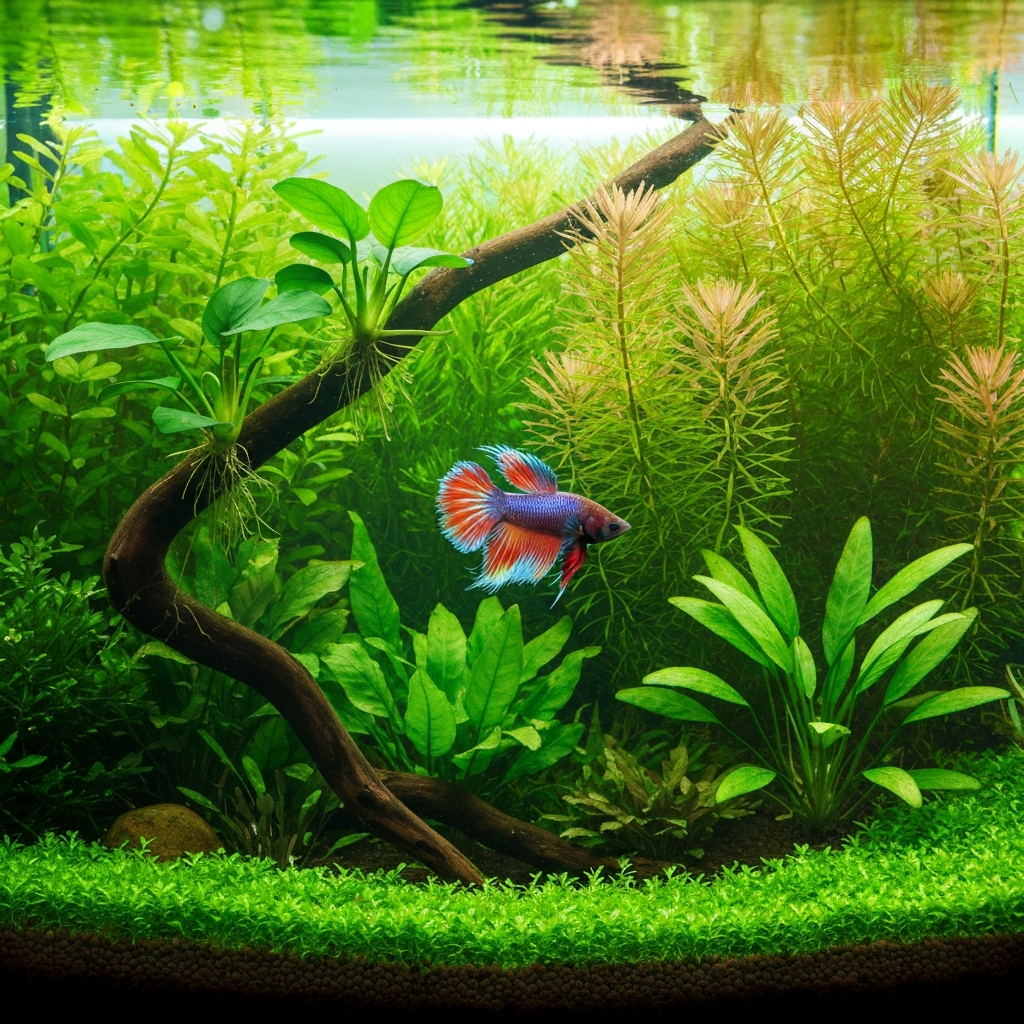
Then I saw a betta in a heavily planted 10-gallon at a local fish store — not a display tank, just the owner's personal setup. That fish was weaving through anubias leaves, resting on a broad cryptocoryne, and peeking out from behind a wall of java fern. It was the most engaged, curious betta I'd ever seen. No glass surfing. No clamped fins. Just a fish that looked genuinely at home.
That was the moment I understood: bettas don't just tolerate live plants — they need them. Here's everything I've learned about betta tank plants in the seven years since that brown-sludge disaster.
Why Live Plants Matter for Bettas
Bettas in the wild live in densely vegetated rice paddies, slow-moving streams, and shallow marshes across Thailand, Cambodia, and Vietnam. Their entire body plan — long flowing fins, labyrinth organ for breathing surface air, upturned mouth for surface feeding — evolved in plant-choked, low-oxygen waters.
When you drop a betta into a bare glass box with a plastic castle, you're putting a jungle creature in a minimalist apartment. They survive, sure. But they don't thrive.
Live plants do four critical things for your betta: First, they provide territorial structure. Bettas are solitary fish that patrol a defined territory. Plants break line of sight, creating "rooms" that make the tank feel larger and more secure. Second, they create resting spots. Those heavy fins are exhausting to drag around, and bettas need broad leaves near the surface where they can pause and breathe. Third, plants improve water quality by absorbing ammonia, nitrite, and nitrate — the same waste products that poison fish in uncycled tanks. Fourth, they reduce stress. A betta that can hide, explore, and rest is a betta that displays brighter colors and builds bigger bubble nests.
Plastic plants do none of this. They tear fins, leech questionable chemicals, and provide zero biological benefit. I'll go deeper on that later, but the short version is: throw your plastic plants in the trash. Every single one.
Top 5 Beginner Betta Plants
If you've never kept aquarium plants before, start here. These five are borderline unkillable. I've neglected them for weeks. I've left the light off for days. I've put them in tanks with zero fertilizer and hard well water. They're still alive.
1. Anubias nana — $6–9 at any chain store. This is the holy grail of betta plants. Broad, dark green leaves that bettas love to rest on. It grows so slowly you'll barely notice, but it's practically immortal. Anubias feeds from the water column, not the substrate, so you attach it to driftwood or a rock with a drop of super glue gel. Never bury the rhizome (the thick horizontal stem the leaves grow from) — it'll rot within a week. Low light, no CO2, no fertilizer needed. If you only buy one plant, buy this one.
2. Java fern — $5–7. Same care as anubias: attach to hardscape, don't bury the rhizome. Java fern has long, textured leaves that create excellent cover for a betta patrolling the mid-level of the tank. The coolest thing about java fern is how it reproduces — it grows tiny baby plants on the tips of its leaves. After about four months, those babies detach and float around until they anchor somewhere. You'll go from one java fern to ten without spending another dollar.
3. Marimo moss ball — $3–5. Despite the name, this isn't moss — it's a spherical colony of algae that grows in cold lakes in Japan, Iceland, and Scotland. It's the ultimate no-effort plant. Drop it in. Walk away. Bettas sometimes nudge them around the tank like soccer balls, which is genuinely entertaining to watch. Squeeze it gently in old tank water during water changes to keep it clean. If it starts turning brown, move it to a shadier spot — direct light cooks them.
4. Amazon sword — $5–8. This is your first rooted plant, and it's a statement piece. Amazon swords grow big — easily 12–16 inches tall with long, flowing leaves that reach the surface. Bettas love swimming through them. Unlike anubias and java fern, swords are heavy root feeders. You must plant them in substrate and you must use root tabs (Seachem Flourish Tabs, $10 for a 10-pack — push one under the roots every 3 months). Without root tabs, swords slowly yellow and die. With root tabs, they become the centerpiece of your tank.
5. Cryptocoryne wendtii — $5–7. Crypts are the unsung heroes of low-tech planted tanks. They come in green, bronze, and red varieties, all of which add color contrast against bright green anubias and java fern. Crypts are root feeders like swords, so use root tabs. One warning: crypts are famous for "crypt melt" — when you first plant them, the leaves may dissolve into mush over 48 hours. Don't panic. Don't throw it away. The roots are alive and new leaves will emerge within two weeks. Every crypt keeper learns this lesson the hard way. I certainly did.
Floating Plants for Betta Tanks
Bettas spend most of their lives in the top third of the water column. Floating plants create the shaded, dappled-light environment they evolved in, and the root systems trailing down give them something to weave through.
Water sprite — $5. You can plant it in the substrate or let it float. I prefer floating it — it grows fast, pulls tons of nitrate out of the water, and the lacy leaves create a gorgeous canopy. Bettas love resting in the top branches. It does grow aggressively, so you'll be trimming and discarding handfuls every two weeks. If you have a local fish store, they might give you store credit for your trimmings.
Amazon frogbit — $5–7 for a handful. Think of frogbit as miniature lily pads. Round leaves sit on the surface, roots hang down 3–6 inches into the water. Bettas build bubble nests under frogbit leaves — it's one of the most reliable bubble-nest triggers I've found. Keep the surface flow gentle. Frogbit hates getting its leaves wet from filter splashing, and it'll rot if water pools on top.
Red root floaters — $6–8. These are the prettiest floating plant, hands down. Under good light, the leaves turn from green to deep red, and the roots glow a faint pink. Against a dark background, the color contrast is stunning. They're slightly more demanding than frogbit — they need moderate light and calm water — but the visual payoff is worth it.
Duckweed: a warning. Duckweed is the glitter of the aquarium hobby. It gets everywhere. It never goes away. One tiny leaf hitches a ride on your arm during a water change and suddenly every tank in your house has a duckweed infestation. It's nearly impossible to eradicate and it blocks light from reaching your other plants. I'm not saying don't buy duckweed — it's fantastic at soaking up nitrates — but know what you're signing up for. Once it's in, it's in forever.
Plants That Create Resting Spots
A betta with heavy fins — especially halfmoons, rosetails, and over-halfmoons — spends a surprising amount of time resting. They need broad, horizontal leaves near the surface where they can park themselves and breathe without expending energy swimming.
Anubias is the obvious choice, but not all anubias are created equal. Anubias barteri ($8–12) has leaves 2–3 inches wide — big enough for even a full-grown halfmoon to lounge on. Anubias coffeefolia ($7–10) has deeply textured, almost corrugated leaves that hold their shape well. Both can be attached to driftwood angled upward, creating a natural "shelf" 3–4 inches below the surface.
Banana plant ($4–6) is another great option. It's a weird-looking plant — it grows from a cluster of green "bananas" that sit on top of the substrate — but it sends long stems to the surface with broad, lily-like leaves. Bettas perch on them constantly. Place the banana cluster on the substrate (don't bury it) and the plant does the rest.
If you don't have plants with broad leaves yet, you can buy a betta leaf hammock ($3) — a fake leaf on a suction cup. It's plastic, yes, but it's a single smooth leaf that won't tear fins. I keep one in my quarantine tank. It's not as good as a real anubias leaf, but it's infinitely better than nothing.
How to Plant: Rhizome vs Root Plants
The single biggest mistake new plant keepers make is burying rhizome plants. Here's the rule: if the plant has a thick green horizontal stem at its base (a rhizome), do not bury it. The rhizome needs water flowing around it. Bury it in gravel or sand and it will rot, the leaves will yellow, and the plant will die within a week.
Rhizome plants include: anubias (all varieties), java fern, bolbitis, and bucephalandra. The best way to plant them is the super glue method. Buy cyanoacrylate gel super glue (Gorilla Glue Gel is $5 at any hardware store — the gel formula is important, liquid won't work). Take your piece of driftwood or rock, dab a small drop of gel glue on it, and press the rhizome into the glue for 30 seconds. It bonds instantly. Yes, regular super glue is aquarium safe once it dries. The water actually speeds up the curing process. I've glued probably 50 anubias this way and never lost a fish.
You can also wedge rhizome plants into cracks in driftwood or use cotton thread to tie them down. The thread dissolves after a few weeks, by which point the plant's roots have anchored themselves.
Root plants — amazon swords, cryptocorynes, vallisneria, dwarf sagittaria — go in the substrate. Push them deep enough that the crown (where roots meet leaves) is just barely covered. Use planting tweezers ($8 on Amazon) — your fingers will knock the plant loose and it'll float back up, which is infuriating after the fifth attempt.
For root plants, root tabs are mandatory in inert substrates like sand or plain gravel. Seachem Flourish Tabs and API Root Tabs are both fine. Push one tab into the substrate about 2 inches from the plant's roots every 3 months. Without root tabs, root plants slowly starve. With them, they explode.
Low-Tech vs High-Tech: No CO2 Needed
If you've been researching planted tanks on YouTube, you've probably seen intimidating setups with pressurized CO2 tanks, high-output LED arrays, and automated fertilizer dosing. That's the high-tech world, and it's incredible — lush carpets of foreground plants, crimson red stems, tanks that look like underwater rainforests.
You don't need any of that for a beautiful betta tank.
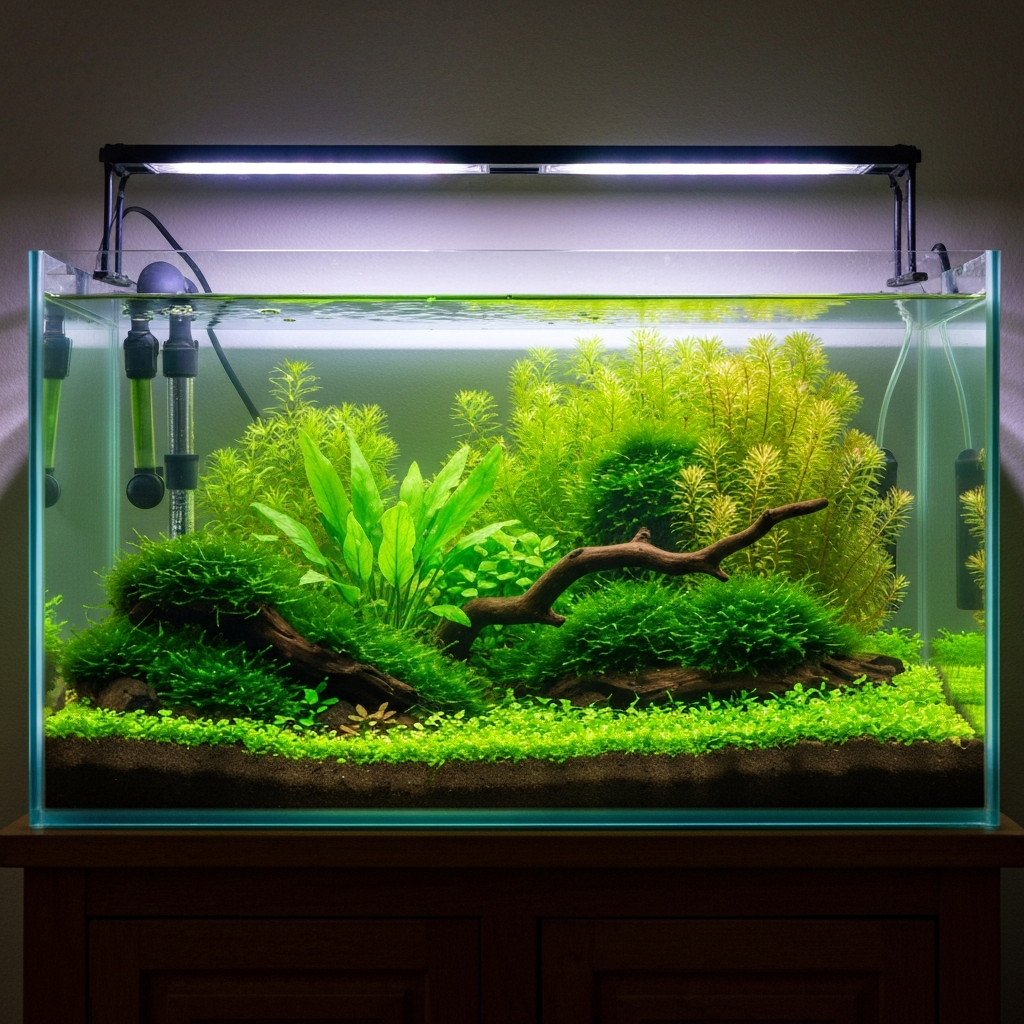
Every plant I've listed in this guide is a low-tech plant. Low-tech means: stock LED light that came with your tank, no injected CO2, no daily fertilizer dosing. These plants evolved in the same shaded, low-nutrient waters that bettas come from. They don't need blazing light or gas injection. They just need patience.
My personal betta tank runs a cheap Nicrew ClassicLED ($20 on Amazon) on a 7-hour timer and gets a squirt of Easy Green all-in-one fertilizer ($20 for a bottle that lasts 6 months) once a week after water changes. That's it. The anubias is massive, the java fern has spawned three generations, and the crypts are deep bronze. Total monthly maintenance: about 5 minutes.
High-tech is a fun rabbit hole if you want to go deep into the hobby. But for a betta tank that looks beautiful and keeps your fish healthy, low-tech is all you'll ever need.
Plants to AVOID in Your Betta Tank
Not all plants are safe for bettas. Some will tear their fins. Some will foul your water. Here's what to skip:
Plastic plants. I know they're cheap. I know they don't die. But run your finger along the edge of a plastic plant and feel those sharp seams and injection-mold ridges. Now imagine a betta's fin — thinner than tissue paper — dragging across that edge every time the fish swims past. Plastic plants cause fin tears, which lead to fin rot, which leads to dead fish. If you absolutely can't keep live plants, use silk plants instead. They're soft, they look decent, and they won't shred your betta's fins.
Hornwort. This one is controversial because hornwort is a live plant and some people love it. Here's my issue: hornwort sheds needles constantly. Those needles decompose and spike your ammonia. In a 5-gallon betta tank with minimal filtration, that's a problem. I've also found that hornwort's needle-like leaves are stiff enough to catch betta fins — not as badly as plastic, but noticeably. If you want a fast-growing nitrate sponge, use water sprite or guppy grass instead.
Dwarf baby tears (HC Cuba). This is the plant you see in those stunning carpeted aquascapes. It requires high light, injected CO2, and perfect nutrient balance. Without CO2, it dies within two weeks — I've tested this four times. It's a high-tech plant pretending to be beginner-friendly because it's sold in every Petco tissue culture cup. Don't fall for it.
Maintenance: Trimming, Algae, and Fertilizing
Live plants are lower maintenance than most people think, but they're not zero maintenance. Here's what I actually do week to week.
Trimming. Fast growers like water sprite and amazon swords need trimming every 2–3 weeks. Remove yellowing or damaged leaves by cutting them at the base with aquascaping scissors ($8). Dead leaves left in the tank rot and spike ammonia. For rhizome plants like anubias, just snip off any leaves that look ragged — the plant will grow replacements.
Algae. Some algae is normal and even healthy — it means your tank is alive. But if you're getting green water, hair algae, or black beard algae, something is out of balance. 90% of the time the fix is reducing your light duration. Cut lights from 10 hours to 7. If algae persists, reduce to 6. Also check your nitrate levels — if nitrates are above 40 ppm, you're overfeeding or under-changing water.
A nerite snail ($3) is the best algae cleanup investment you'll make. One snail keeps a 5-gallon tank spotless. They can't reproduce in freshwater, so you'll never have a snail explosion. Just algae-free glass and plant leaves.
Fertilizing. For a low-tech tank with the plants I've recommended, you need very little fertilizer. An all-in-one liquid like Easy Green or NilocG Thrive — one squirt per 5 gallons per week — covers water column feeders like anubias and java fern. Root tabs every 3 months cover the swords and crypts. That's the entire fertilization regimen. Don't overcomplicate it.
Water changes. Plants reduce how often you need to change water, but they don't eliminate it. I change 25% weekly on my planted betta tanks, same as my unplanted ones. The difference is the water parameters are more stable and the fish is visibly less stressed.
Look, here's the bottom line: live betta plants aren't just decoration. They're the difference between a fish that survives and a fish that thrives. You don't need a green thumb. You don't need expensive equipment. You need a few anubias, a java fern, and the willingness to not bury the rhizome. That's it. Do those three things and your betta will show you behaviors you didn't know they had — weaving through leaves, resting on broad greens, building bubble nests under floating canopies. They become the fish they evolved to be.
And honestly? Watching a betta that genuinely loves its home is one of the most satisfying things in this hobby. You'll spend more time staring at your tank than your TV. I guarantee it.
Related Guides

Alex Rivera
I've killed more aquarium plants than most people will ever own. Everything I recommend here survived my learning curve — if it works for me, it'll work for you.