Best Tank Mates for Betta Fish — 5 Companions That Actually Work
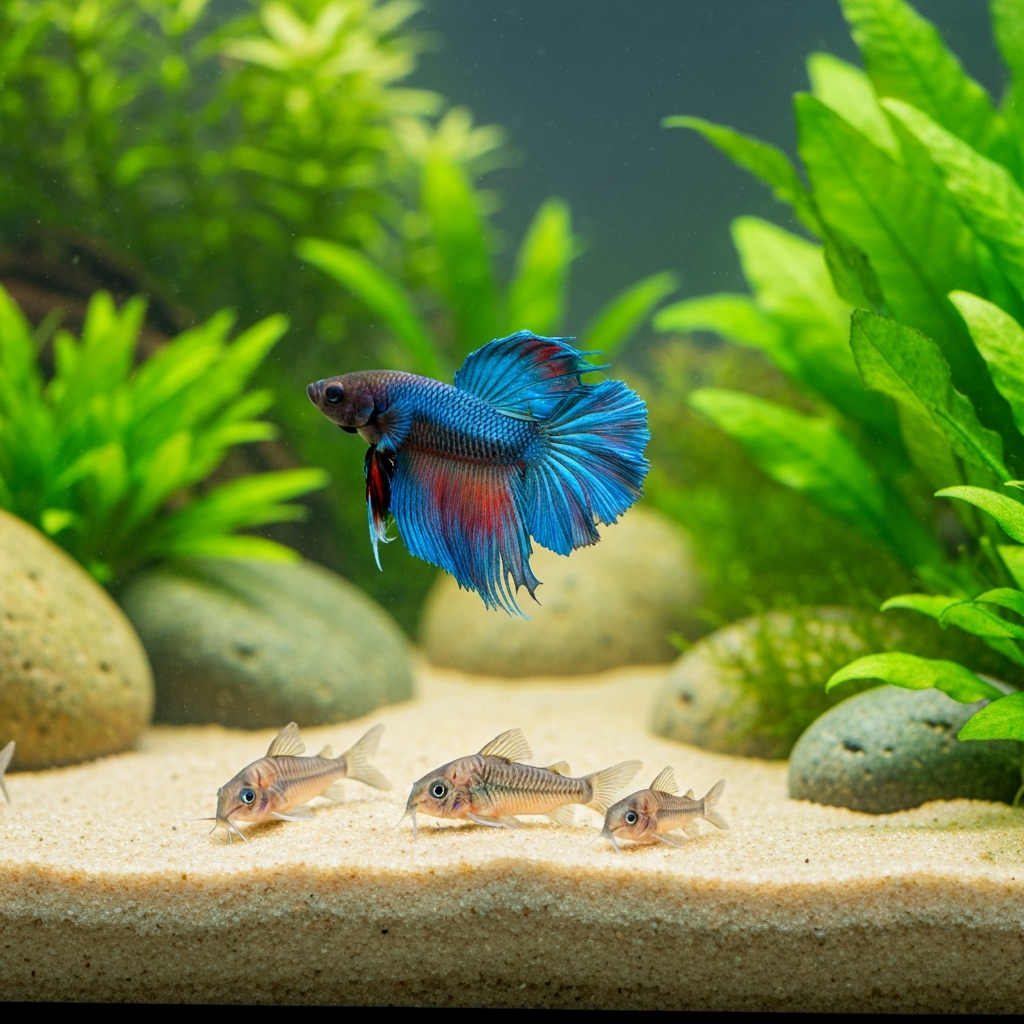
Here's a $40 lesson I learned the hard way: cherry shrimp are not tank mates. They're expensive betta snacks.
I'd read online that bettas sometimes leave shrimp alone. So I bought 12 cherry shrimp for my 10-gallon planted tank. Drip-acclimated them for two hours. Released them at night when my betta was sleeping. Felt like a genius.
Next morning: zero shrimp. Not one. My betta, Kaito, was bloated and wouldn't eat for two days. He'd hunted down every single one in less than 8 hours.
That's the thing about betta tank mates. You don't know until you try. And the trial run costs lives.
After seven years and probably two dozen failed attempts, I've found exactly five species that consistently work — in the right tank size, with the right setup, and with a betta that doesn't have a personal vendetta against anything that moves.
The Golden Rule: Your Betta Decides
Before I list anything, understand this: every betta has a personality. Some are chill. Some are serial killers. You'll find people on Reddit whose betta lives happily with neon tetras, and people whose betta murdered $60 worth of fish in a weekend.
No list is a guarantee. If your betta flares at your hand during feeding time, he's probably not going to tolerate roommates.
That said, here's what's worked for me across multiple bettas and multiple tanks.
1. Corydoras Catfish — The Best Betta Tank Mate, Period
If you can only add one species, make it corydoras. These little armored catfish live on the bottom, mind their own business, and are too fast for most bettas to catch even if they wanted to.
I keep a group of 6 panda cories (Corydoras panda) with my current betta in a 15-gallon. They've been together for 18 months. The betta ignores them completely.
Why they work: Different water column. Corydoras stay on the sand, bettas stay everywhere else. They don't compete for space. Their armored bodies and quick bursts of speed make them unappealing targets.
Requirements: Sand substrate (gravel damages their barbels), groups of 6+, 10-gallon minimum. Bronze cories (Corydoras aeneus) and sterbai cories (Corydoras sterbai) also work well. Avoid pygmy cories — they're too small and swim midwater, making them easy targets.
2. Nerite Snails — Zero Risk, Maximum Algae Control
Snails are the only tank mate that's genuinely 100% safe. Bettas might flare at them once out of curiosity, then ignore them forever.
Nerite snails are my go-to. They eat algae off glass, plants, and decor without damaging anything. They don't breed in freshwater (their eggs need brackish water to hatch), so you won't end up with a snail infestation.
I keep 2 zebra nerites in my 5-gallon betta tank. The glass stays clean and the betta couldn't care less.
Why they work: Hard shell, no antennae or limbs that look like food, stays on surfaces. Mystery snails also work but get larger and produce more waste.
Downside: Nerite eggs look like tiny white sesame seeds and they'll dot your driftwood. They don't hatch, but they're ugly. If that bothers you, go with a single mystery snail instead.
3. Kuhli Loaches — The Night Shift
Kuhli loaches look like tiny eels. They hide all day under driftwood or buried in sand, then come out at night to scavenge. Your betta will barely know they exist.
I added 8 kuhlis to a heavily planted 20-gallon with a female betta. She'd occasionally stare at one when it darted past, but never chased. They're too fast and too slippery.
Why they work: Nocturnal, opposite schedule from your betta. When they cross paths, kuhlis zip away instantly.
Requirements: Sand substrate (they burrow), groups of 6+, lots of hiding spots, 15-gallon minimum. A tight-fitting lid is mandatory — kuhlis are escape artists. I've found two on my floor over the years.
4. Harlequin Rasboras — The Exception to the Rule
Most small schooling fish are a bad idea with bettas. Neon tetras? Nipped fins. Guppies? Bright colors trigger aggression. But harlequin rasboras (Trigonostigma heteromorpha) are different.
They're from the same region as bettas — Southeast Asian blackwater streams. They're fast, they stay in the middle of the water column, and their silver bodies with that black triangle patch don't look like anything a betta instinctively wants to fight.
I keep a school of 10 harlequins in my 20-gallon community. Zero incidents in 14 months.
Requirements: 15-gallon minimum, groups of 8+, planted tank with open swimming space. They're the only schooling fish I'd recommend with a betta, and even then only with a calm individual.
5. Amano Shrimp — The Only Shrimp That Survives
Remember my $40 cherry shrimp massacre? Amano shrimp are the exception. They're 2-3 times the size of cherry shrimp, transparent, and fast. Really fast.
I keep 3 amanos in my 15-gallon. My betta occasionally chases one for about three inches, then gives up. After 8 months, all three are still alive. They're basically invisible janitors — you'll forget they exist until you see one crawling across a leaf at feeding time.
Requirements: Lots of plants and hiding spots, ideally added before the betta. Don't bother with any shrimp smaller than amanos. Ghost shrimp are cheap but often sold as feeders and arrive with parasites.
What Never Works (Stop Trying)
I've tested more combinations than I'd like to admit. Here's what consistently fails:
- Other bettas. Obviously. Don't. Not even females. A sorority needs 20+ gallons, 5+ females, and heavy planting — and even then it fails about half the time.
- Guppies. Their colorful flowing tails look exactly like another betta. Your betta will attack them. Every time.
- Neon or cardinal tetras. They're small, slow, and colorful. Bettas hunt them systematically. I've watched it happen.
- Cherry shrimp. Expensive live food. That's it.
- African dwarf frogs. They're slow, nearly blind, and compete for the same food. Your betta will out-eat them and they'll starve.
The Setup Checklist
Before adding anything to your betta's tank:
- Tank must be 10 gallons minimum (15+ for fish tank mates)
- Heavily planted — break line of sight, create territories
- Add tank mates before the betta when possible
- Rearrange decor when adding new tank mates (resets territorial behavior)
- Have a backup plan — a spare 5-gallon or a way to separate
- Watch for the first 48 hours. If the betta won't stop chasing, separate immediately
Look, the safest betta tank is a solo betta tank. They don't need friends. They're solitary fish and they're perfectly happy alone. If you want a community tank, set one up without a betta in it.
But if you're determined to try, start with snails. Then corydoras. Give it a month between additions. Watch your betta's behavior. Some bettas are community fish at heart. Some are murderers in pretty packaging. You won't know which one you have until you test it.
Just don't start with shrimp. Trust me on that one.
Related Guides
Alex Rivera
Betta keeper since 2019. I've killed enough fish to know what works and what doesn't. Every recommendation here has survived at least 6 months in my tanks.