Betta Fish Water Parameters — The Complete Water Quality Guide
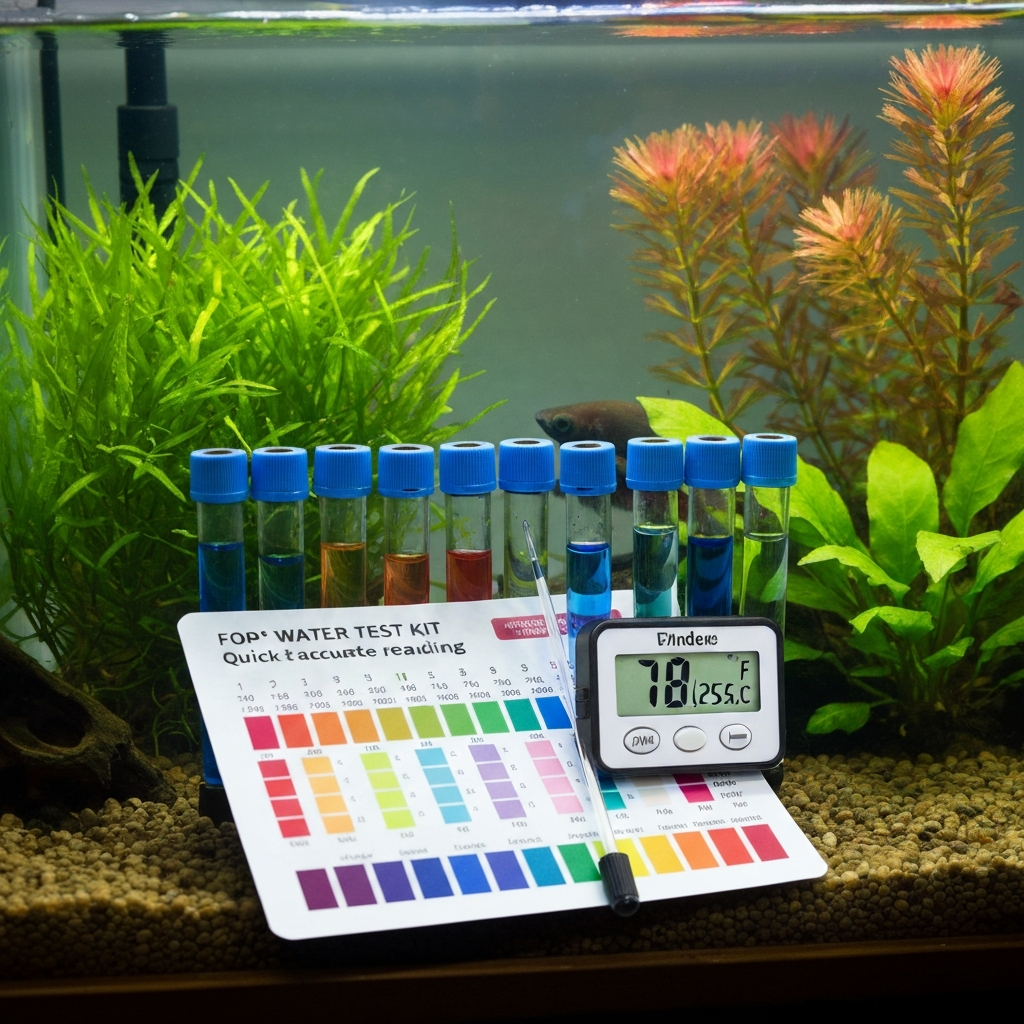
Water kills more betta fish than disease ever will.
I learned this the hard way. My second betta — a gorgeous halfmoon plakat named Opal — died three weeks after I brought him home. He was in a cycled 5-gallon tank, eating well, building bubble nests. Then one morning: clamped fins, gasping at the surface, dead by evening.
I tested the water and found 2.0 ppm ammonia. I'd been doing weekly water changes with tap water straight from the faucet, no conditioner. The chlorine had nuked my beneficial bacteria, the cycle crashed, and ammonia spiked before I even noticed.
Since then, I've tested my water religiously. Every Sunday morning — coffee in one hand, API test tubes in the other. Here's everything I've learned about betta fish water parameters: what they should be, why they matter, and how to fix them when they go wrong.
Betta Fish Temperature — 78°F to 80°F Is Non-Negotiable
Bettas are tropical fish from Southeast Asia — specifically the shallow rice paddies, slow-moving streams, and floodplains of Thailand, Cambodia, and Vietnam. In the wild, water temperatures in these habitats range from 75°F to 86°F depending on the season. Your tank needs to stay between 78°F and 80°F (25.5°C to 26.5°C).
This isn't a suggestion. Below 76°F, a betta's metabolism slows dramatically. Their digestive system basically shuts down — food rots in their gut instead of being digested, leading to bloat, constipation, and swim bladder disease. Below 74°F, their immune system weakens to the point where opportunistic infections like ich and fin rot become nearly inevitable. Below 72°F, you're looking at severe lethargy, loss of color, and death within days.
Above 82°F, you hit the opposite problem. Metabolism accelerates — bettas become hyperactive, burn through energy reserves, and age faster. High temperatures also reduce dissolved oxygen in the water, and since bettas breathe from the surface via their labyrinth organ, they're less affected by low dissolved oxygen than other fish — but the bacteria in your filter are not. Hot water + low oxygen = crashed cycle.
How to maintain stable betta fish temperature:
- Use an adjustable heater, not a preset one. Preset heaters claim to hold 78°F but routinely swing between 72°F and 84°F in real-world testing.
- A 25–50 watt heater is sufficient for a 5–10 gallon tank. The Fluval M50 ($25) and Eheim Jager 50W ($28) are my go-to recommendations.
- Always use a separate thermometer. Heaters lie; thermometers don't. A $3 Marina floating glass thermometer is all you need.
- Place the heater near the filter output or an air stone to distribute warm water evenly throughout the tank. Cold spots stress bettas as much as low temperatures.
Betta Fish pH Level — Aim for 6.8 to 7.5
The ideal betta fish pH level is between 6.8 and 7.5, with 7.0 (neutral) being the sweet spot. Bettas are surprisingly adaptable to pH — wild bettas live in water that ranges from highly acidic (pH 5.0 in peat swamps) to slightly alkaline (pH 7.5 in some rice paddies) — but they do not tolerate rapid pH swings.
A stable pH of 7.8 is far safer than a pH that bounces from 6.5 to 7.5 every water change.
The single biggest mistake beginners make with pH is chasing a "perfect" number. They read that bettas prefer 7.0, test their tap water at 7.8, and start dumping pH Down chemicals into the tank. The pH crashes to 6.2 overnight, they panic and add pH Up, and the fish dies from osmotic shock. Don't do this.
How to manage betta fish pH level safely:
- Test your tap water pH first. If it's between 6.5 and 8.0, your betta will adapt. Stability matters more than the exact number.
- If you need to lower pH naturally, add Indian almond leaves (catappa leaves), alder cones, or driftwood. These release tannins that gradually and safely acidify the water.
- If your tap water pH is extremely high (above 8.2), mix it with RO (reverse osmosis) or distilled water — about 25% RO to 75% tap — to bring it down gently.
- Never use chemical pH adjusters in a tank with fish. The swing is too fast and too dangerous.
Betta Fish Ammonia, Nitrite, and Nitrate — The Big Three
If you only remember three numbers from this guide, make them these:
- Ammonia: 0 ppm — Always. Any detectable ammonia is toxic.
- Nitrite: 0 ppm — Always. Nitrite binds to blood hemoglobin and suffocates fish from the inside.
- Nitrate: below 20 ppm — Ideally under 10 ppm. The end product of the nitrogen cycle, removed by water changes.
Betta fish ammonia poisoning is the number one killer of aquarium fish, period. Ammonia comes from fish waste, uneaten food, and decaying plant matter. In a healthy, cycled aquarium, beneficial bacteria convert ammonia to nitrite and then to nitrate — but if that bacterial colony is disrupted (by chlorine, medication, or a tank that was never cycled in the first place), ammonia accumulates fast.
Symptoms of ammonia poisoning in bettas include: red or inflamed gills, gasping at the surface, lethargy, clamped fins, and red streaks on the body or fins. If you see these signs, test immediately. If ammonia is above 0.25 ppm, do a 50% water change with conditioned water and dose the tank with Seachem Prime, which temporarily detoxifies ammonia for 24–48 hours while your bacteria recover.
Nitrite is less common than ammonia spikes but far more dangerous. At just 0.5 ppm, nitrite can cause brown blood disease — it converts hemoglobin to methemoglobin, which can't carry oxygen. A betta with nitrite poisoning will gasp at the surface even in well-oxygenated water. Treatment is the same: immediate water change plus Prime.
Water Hardness — GH and KH Explained
General hardness (GH) measures dissolved calcium and magnesium. Carbonate hardness (KH) measures carbonate and bicarbonate ions — essentially, your water's buffering capacity against pH swings. Here's what bettas need:
- GH: 3–8 dGH (50–140 ppm) — Bettas prefer soft to moderately hard water. Very hard water (above 12 dGH) isn't directly harmful but can stress them over time.
- KH: 3–5 dKH (50–90 ppm) — Enough to prevent pH crashes, not so much that pH becomes impossible to adjust naturally.
If your tap water is liquid rock (GH above 15 dGH), your betta will probably survive but won't thrive. Mixing tap water with RO or distilled water — starting at 25% RO and adjusting — is the safest way to bring hardness down. Conversely, if your KH is below 2 dKH, your pH can swing wildly overnight because there's nothing buffering it. Adding a small amount of crushed coral in a mesh bag inside your filter will gradually raise KH without spiking pH.
Most betta keepers never test GH and KH. That's fine — until you have a pH crash or your plants start melting, at which point hardness is the first thing you should check. The API GH & KH Test Kit is $12 and lasts for years.
The Nitrogen Cycle — The Foundation of Betta Fish Water Quality
You can own the most expensive tank, the best heater, and the prettiest betta in the store. None of it matters if your tank isn't cycled.
The nitrogen cycle is the biological process that converts toxic fish waste into relatively harmless compounds. Here's how it works, step by step:
- Fish waste and uneaten food decompose, releasing ammonia (NH3/NH4+). This is highly toxic.
- Nitrosomonas bacteria colonize your filter media and convert ammonia into nitrite (NO2-). Still toxic, but it's progress.
- Nitrobacter bacteria convert nitrite into nitrate (NO3-), which is far less toxic and removed through regular water changes.
This cycle takes 4–8 weeks to establish in a new tank. You can either do a fishless cycle (add pure ammonia or fish food to an empty tank and wait) or a fish-in cycle (add the fish and manage ammonia with daily testing and water changes).
I strongly recommend fishless cycling. It's slower, but you're not gambling with a living creature's life. Dose the tank with pure ammonia (Dr. Tim's Ammonium Chloride, $5) to 2 ppm, test daily, and wait until ammonia and nitrite both read 0 ppm within 24 hours of dosing. That's when your tank is ready.
If you already have a betta in an uncycled tank, you're doing a fish-in cycle. Test water daily. Any ammonia or nitrite above 0.25 ppm — do a 50% water change. Dose Prime daily to detoxify whatever you can't remove. It's exhausting, but it saves the fish.
Water Changes Schedule — Consistency Over Intensity
The single most important habit for maintaining betta fish water quality is a consistent water change routine. Here's my schedule:
- 5-gallon tank: 25–30% water change once per week. Use a gravel vacuum to remove debris from the substrate while you siphon.
- 10-gallon tank: 20–25% water change once per week. Larger water volume dilutes waste more effectively, so you can go slightly smaller.
- Tanks under 5 gallons: 30–50% twice per week. Small volumes foul fast — there's just no way around it. This is why I don't recommend anything under 5 gallons.
Never change 100% of the water unless there's a catastrophic contamination (medication overdose, something toxic spilled in the tank). Large water changes shock the bacterial colony and swing parameters too dramatically.
Water change best practices:
- Always temperature-match the new water to the tank. Use your thermometer — your hand is not accurate enough. A 5-degree difference can send a betta into temperature shock.
- Add water conditioner to the new water before it goes in the tank. Dose for the full tank volume, not just the amount you're replacing — this ensures any chlorine or chloramine in the new water is neutralized instantly.
- Pour water in gently. Use a small cup, a colander, or pour water onto a piece of decor to diffuse the flow. Bettas hate being blasted by a waterfall of new water.
- Vacuum the gravel. Uneaten food and fish waste settle into the substrate and rot — this is where most ammonia spikes originate.
Water Conditioners — What You Actually Need
You need exactly one water conditioner: Seachem Prime ($8 for a 100ml bottle that lasts 6 months). Here's why nothing else compares:
- It neutralizes chlorine and chloramine instantly — the bare minimum any conditioner should do.
- It detoxifies ammonia, nitrite, and nitrate for 24–48 hours. This is what makes it essential during cycling or any water quality emergency.
- It's concentrated — 1 ml treats 10 gallons. A little bottle goes a long way.
Other conditioners like API Stress Coat add aloe vera (which supposedly helps the slime coat — debatable) and Tetra AquaSafe adds a bunch of proprietary "vitamins." Neither detoxifies ammonia. If you can only buy one product for water treatment, buy Prime.
What you don't need: pH adjusters, "bacteria in a bottle" (most are dead on arrival and do nothing — the exception is FritzZyme TurboStart 700, which actually works but requires refrigeration), and "betta water" sold in cartons at pet stores. It's just dechlorinated tap water at a 2000% markup.
Tannins and Blackwater — Your Betta's Natural Habitat
Wild bettas don't live in crystal-clear water. They live in blackwater environments — slow-moving, tannin-stained pools tinted amber-brown by decaying leaves, wood, and vegetation. Tannins are organic compounds that lower pH, soften water, and have mild antibacterial and antifungal properties.
Adding tannins to your betta tank is optional but beneficial. Here's how:
- Indian almond leaves (catappa leaves): The classic choice. Add one large leaf per 10 gallons. It'll float for a few days, then sink and slowly decompose, releasing tannins for about 2–3 weeks. Replace monthly.
- Alder cones: Smaller and stronger than almond leaves. Use 2–3 per 5 gallons. They release more tannins faster.
- Driftwood: Mopani and Malaysian driftwood leach tannins for months. Boil it first if you want less tint, or embrace the amber look.
- Rooibos tea: Caffeine-free, organic rooibos tea steeped in tank water. One tea bag per 10 gallons. A cheap and effective way to add tannins without leaves decaying in your tank.
Don't overdo it. You want a light amber tint, not opaque brown. If your pH drops below 6.0, you've added too many tannins and your KH buffer is depleted — do a water change to bring it back up. And yes, activated carbon in your filter will remove tannins. If you want blackwater, remove the carbon.
Bettas in tannin-stained water show better coloration, build more bubble nests, and are generally more active. It's the closest thing to their natural habitat you can provide.
Testing Your Water — The $25 Habit That Saves Lives
You cannot manage what you don't measure. I've been keeping bettas for seven years and I still test my water every single week. Here's what you need:
- API Freshwater Master Test Kit ($25): This is the gold standard. It tests pH, high-range pH, ammonia, nitrite, and nitrate using liquid reagents — far more accurate than test strips. The kit includes about 800 tests and lasts over a year. Worth every penny.
- API GH & KH Test Kit ($12): Optional but recommended if you have pH stability issues or use RO water. Tests general hardness and carbonate hardness.
- Digital thermometer: Not technically a test kit, but verify your heater's accuracy daily. The $3 Marina glass thermometer is fine. A $12 digital probe thermometer is faster and more accurate.
Avoid test strips. They're convenient — dip and read in 30 seconds — but they're inaccurate, inconsistent, and don't test for ammonia (the most important parameter). I've compared Tetra EasyStrips against the API liquid kit and the strips showed 0 ppm ammonia when the liquid kit showed 0.5 ppm. That's the difference between a healthy fish and a dead one.
Testing schedule:
- Established tank (6+ months): Test ammonia, nitrite, nitrate, and pH once per week — ideally the day before your water change.
- New tank / cycling: Test ammonia and nitrite daily. Track the numbers in a notebook or spreadsheet so you can see the cycle progressing.
- After any change: If you add new fish, new plants, medication, or change your filter media — test 24 hours later. Anything that disturbs the bacterial colony can trigger a mini-cycle.
Quick Reference: Betta Fish Water Parameters Cheat Sheet
Print this, screenshot it, or write it on a sticky note and tape it to your tank stand:
- Temperature: 78°F – 80°F (25.5°C – 26.5°C)
- pH: 6.8 – 7.5 (stable is more important than perfect)
- Ammonia: 0 ppm — always
- Nitrite: 0 ppm — always
- Nitrate: < 20 ppm (ideally < 10 ppm)
- GH: 3 – 8 dGH (50 – 140 ppm)
- KH: 3 – 5 dKH (50 – 90 ppm)
- Water changes: 25% weekly (5-gallon tank)
If every betta owner followed these parameters, we'd see dramatically fewer cases of fin rot, dropsy, swim bladder disease, and unexplained betta deaths. Bad water is the root cause of nearly every betta health problem — and the beautiful thing is, it's completely within your control.
You don't need expensive equipment or advanced chemistry knowledge. You need a $25 test kit, a bottle of Prime, a heater that actually works, and the discipline to test your water every week. Do those four things and your betta will thrive for years.
Related Guides
Alex Rivera
I've tested more water parameters than I can count. Everything in this guide comes from real tanks, real fish, and real mistakes I've made and learned from.