Best 1 Gallon Betta Fish Tank Filter — Safe Low-Flow Filters for Small Bowls
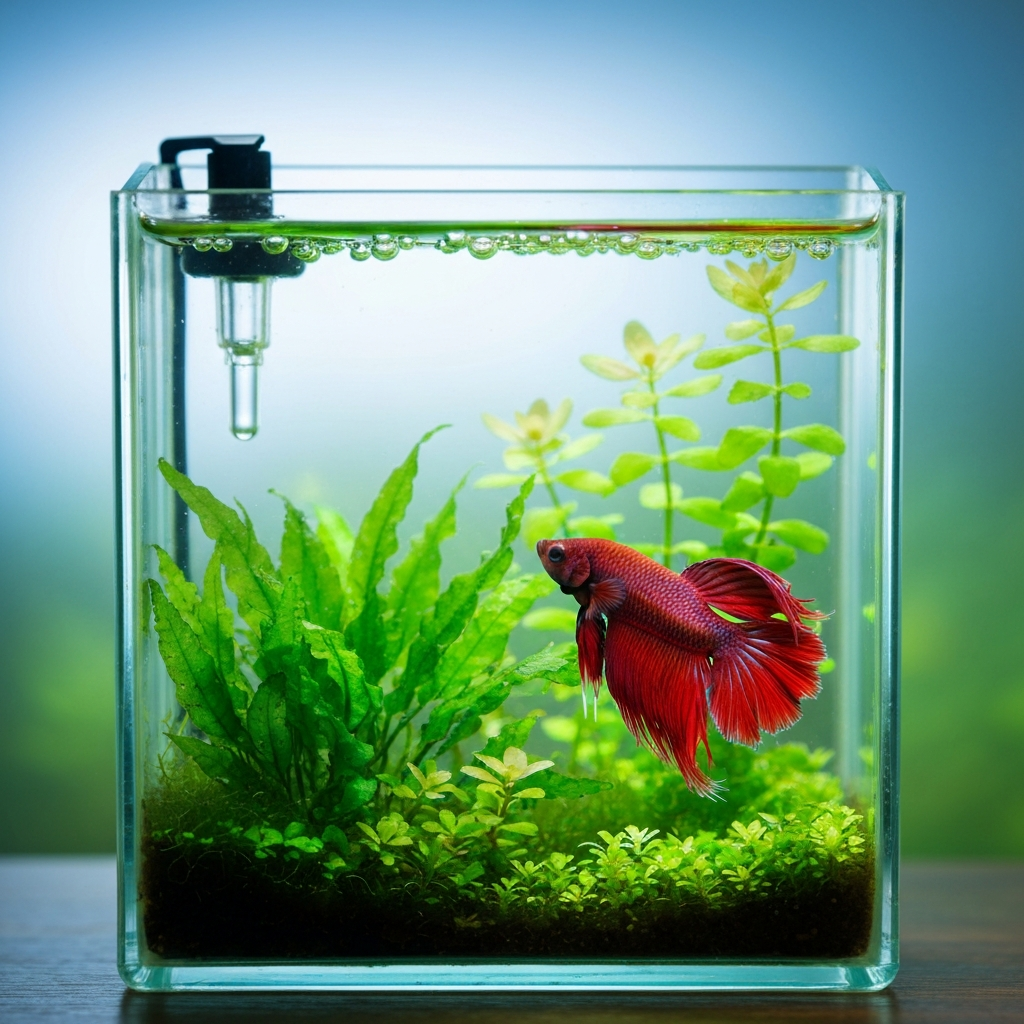
I still remember my first betta, a stunning halfmoon I named Comet. Back in 2019, I was a total beginner, and I did what so many of us do: I went to a big-box pet store and bought one of those "complete" 1-gallon betta kits. The box had a picture of a happy betta, so I thought I was doing everything right. Comet spent his days lethargic at the bottom of his tiny bowl, and his water was always cloudy, no matter how often I changed it. The kit didn't come with a filter, and the store employee told me, "Bettas live in puddles, they don't need one."
That is, without a doubt, the most dangerous myth in the fishkeeping hobby. I learned the hard way that a filter isn't a luxury; it's a life-support system. Comet's "puddle" was a toxic soup of his own waste, and he was suffering. That experience sent me down the rabbit hole of betta research, and it's the entire reason I started this blog. I never want another betta keeper to feel the guilt I felt, or another betta to endure what Comet did.
So, you're looking for a 1-gallon betta fish tank filter. Let's have an honest chat. A 1-gallon tank is far too small for a betta to thrive long-term. But I also know that sometimes you're stuck with one, maybe as a temporary hospital tank or because you were given bad advice, just like I was. My goal here isn't to shame you; it's to help you make that tiny environment as safe and stable as possible for your fish *right now*, while you plan for an upgrade. And for that, a filter is absolutely non-negotiable.
Why Filtration in a 1-Gallon Tank is a Matter of Life and Death
Imagine living in a tiny room where the air gets toxic every few hours. That's what a 1-gallon tank is like for a betta without a filter. Here's the simple breakdown:
- Fish Waste = Ammonia: Your betta produces waste, and that waste breaks down into ammonia. Ammonia is highly toxic and will chemically burn your fish's gills, causing stress, disease, and eventually, death.
- Small Water Volume = Fast Poisoning: In a large tank (5+ gallons), that ammonia is diluted. In a tiny 1-gallon tank, it becomes concentrated and deadly in a matter of hours.
- The Filter's Real Job: A good filter does more than just suck up debris. Its primary purpose is to provide a home for a colony of beneficial bacteria. This bacteria is the hero of your aquarium—it consumes toxic ammonia and converts it into less harmful substances (first nitrite, then nitrate). This is called the "nitrogen cycle," and it's impossible to establish without a filter.
Without a filter, you are fighting a losing battle with daily 100% water changes, which is incredibly stressful for your betta. A filter stabilizes the environment and makes it livable.
The Big Problem: Most "Nano" Filters are Too Powerful
Here's the catch-22. You need a filter, but most filters on the market, even those labeled for "small tanks," are designed for 2.5 or 3-gallon tanks. In a 1-gallon space, they create a hurricane. Bettas, with their long, flowing fins, are not strong swimmers. They come from still or slow-moving waters. A strong current will exhaust them, stress them out, and can even tear their delicate fins.
This rules out most small hang-on-back (HOB) filters or internal power filters. They're simply too aggressive. The solution? The humble, old-school, and incredibly effective sponge filter.
My Top Picks: The Only Filters I Trust for a 1-Gallon Tank
A sponge filter is the perfect solution for this unique problem. It works by using an air pump to draw water through a porous sponge. This provides gentle mechanical filtration (trapping debris) and a massive surface area for beneficial bacteria to grow. Best of all, the flow is gentle and can be adjusted to be perfectly safe for a betta.
Best Overall Filter: AQUANEAT Mini Sponge Filter
This is my go-to for any nano tank, hospital setup, or fry grow-out tank. It's tiny, reliable, and does its job perfectly without taking up too much precious real estate in a 1-gallon tank. The corner shape is a smart design that helps it tuck away neatly.
AQUANEAT Mini Sponge Filter
This filter is the ideal size for a 1-gallon tank. It provides excellent biological filtration without creating a strong current. The sponge material is fine enough to cultivate a dense bacteria colony, keeping ammonia in check. It's the safest and most effective option for such a small volume of water.
Essential Accessories: You Can't Run a Sponge Filter Without These!
A sponge filter is just a piece of plastic and sponge on its own. It needs an air pump to make it work, and crucially, a way to control the airflow. Do not skip the control valve! It's the most important part for making the setup betta-safe.
Hygger Quiet Mini Air Pump for 1-15 Gallon
Most air pumps are noisy and way too powerful. This Hygger model is specifically designed for small tanks. It's incredibly quiet (I've used it in my office) and provides just enough power for a mini sponge filter without being overkill. It comes with tubing and a check valve, which is a nice bonus.
Pawfly Airline Control Valves
This is the magic component. This simple plastic valve gets installed in the airline tubing between the pump and the filter. It allows you to dial the airflow up or down. For a 1-gallon tank, you'll want to turn it way down so you get a gentle stream of bubbles, not a violent eruption. This is the key to preventing stress.
How to Set Up Your Sponge Filter System
Setting this up is easy, but the order of operations matters. Here’s my step-by-step process:
- Prepare the Sponge: Take the sponge filter out of the package. Give the sponge part a few good squeezes in a cup of dechlorinated water to remove any dust. Never use soap!
- Connect the Tubing: Attach one end of your airline tubing to the nozzle on the sponge filter.
- Install the Control Valve: Cut the airline tubing about halfway between where the pump will be and the tank. Insert the two-way control valve, connecting one end of the tubing to the valve's input and the other piece of tubing to the valve's output.
- Install the Check Valve: A check valve is a one-way valve that prevents water from siphoning back into your air pump if the power goes out (which can destroy the pump). Install this on the tubing between the control valve and the air pump. The Hygger pump I recommended comes with one.
- Position Everything: Place the sponge filter in the corner of your tank. Position the air pump somewhere near the tank, but make sure it's above the water line if you're not using a check valve.
- Adjust the Flow: Plug in the air pump. You'll see bubbles start coming out of the filter's uplift tube. Now, use the knob on your control valve to turn the flow down. You're aiming for a gentle, lazy stream of bubbles—just enough to see water circulating. For a betta in a 1-gallon tank, less is more.
Filter Options Compared
While I strongly recommend the Aquaneat filter, there are other similar mini sponge filters. Here's how they stack up.
| Product | Type | Best For | Pros | Cons |
|---|---|---|---|---|
| AQUANEAT Mini Sponge Filter | Corner Sponge | Maximizing space in a tiny tank. | Space-saving design; effective filtration; weighted base. | Only comes as a single unit. |
| Pawfly Mini Cylindrical Sponge Filter | Cylindrical Sponge | Having backups or multiple small tanks. | Great value (often sold in multi-packs); simple design. | Takes up more central space; not weighted, may need to be buried in substrate. |
The Unfiltered Truth: Your Long-Term Plan Must Be an Upgrade
Okay, you've got your 1-gallon tank filtered and as safe as it can be. You've done a great job making the best of a bad situation. Now what?
Your number one priority should be to upgrade to a 5-gallon tank as soon as you can.
A 1-gallon tank, even with a perfect filter, is a survival pod, not a home. It's inherently unstable. A tiny temperature fluctuation, a single missed water change, or a bit of uneaten food can cause a catastrophic ammonia spike. There is no room for error.
In a 5-gallon tank, your betta will have:
- Space to Explore: Bettas are intelligent and curious fish. They need room to swim, explore, and establish territory.
- Stable Water Parameters: The larger water volume acts as a buffer, making it much harder for toxins to build up and easier to maintain a stable temperature.
- Room for Enrichment: You can add live plants, caves, and betta logs that will make your fish feel secure and prevent boredom.
Think of the 1-gallon filtered setup as a hospital stay. It's keeping your betta alive and stable, but the goal is to get them home to a proper environment where they can truly live a long, colorful, and happy life.
1-Gallon Filter FAQ
- Can a betta live in a 1-gallon tank without a filter?
-
No, not safely or humanely. Without a filter, toxic ammonia from waste will build up to deadly levels within 1-2 days. It requires constant, stressful water changes to even keep the fish alive. A filter is the only way to create a stable, cycled environment that processes this waste.
- How often do I clean a sponge filter in a 1-gallon tank?
-
During your weekly water change (which should be about 50% in a 1-gallon tank), take the sponge filter out and gently squeeze it a few times in the bucket of *old tank water* you just removed. You'll see brown gunk come out. That's all you need to do. Never, ever rinse it under tap water, as the chlorine will kill the beneficial bacteria colony you need to keep your fish safe.
- My filter's flow is still too strong for my betta. What can I do?
-
This is why the air control valve is so critical. If the flow is too strong, simply turn the knob on the valve to reduce the amount of air going to the filter. This will decrease the bubble output and slow the current. You want just a gentle burble. If you've lost your valve, you can also try placing a tall silk plant or other decoration directly in front of the filter's output to baffle or block the flow.
Final Verdict: Your 1-Gallon Survival Checklist
I get it. You love your fish and want to do what's right, but you're working with a 1-gallon tank. Don't panic. By following these steps, you can provide the safest possible environment while you plan for the future.
- ✅Acknowledge the situation: A 1-gallon tank is a temporary, life-support setup, not a permanent home.
- ✅Install the right filter: Get a mini sponge filter like the AQUANEAT Mini. It's the only safe and effective type for this size.
- ✅Control the flow: You MUST use a quiet air pump and an air control valve to turn the current down to a gentle bubble stream.
- ✅Perform diligent maintenance: Do 50% weekly water changes, and gently clean the sponge in the old tank water.
- ✅Plan your upgrade: Start saving and researching for a 5-gallon tank kit. Your betta will thank you for it with years of vibrant color and personality.
You've taken the most important step by seeking out information to improve your fish's life. Keep learning, keep improving, and you'll be an amazing betta keeper. Happy fishkeeping!