The Only Safe 2 Betta Fish Tank: My Divided Tank Setup Guide
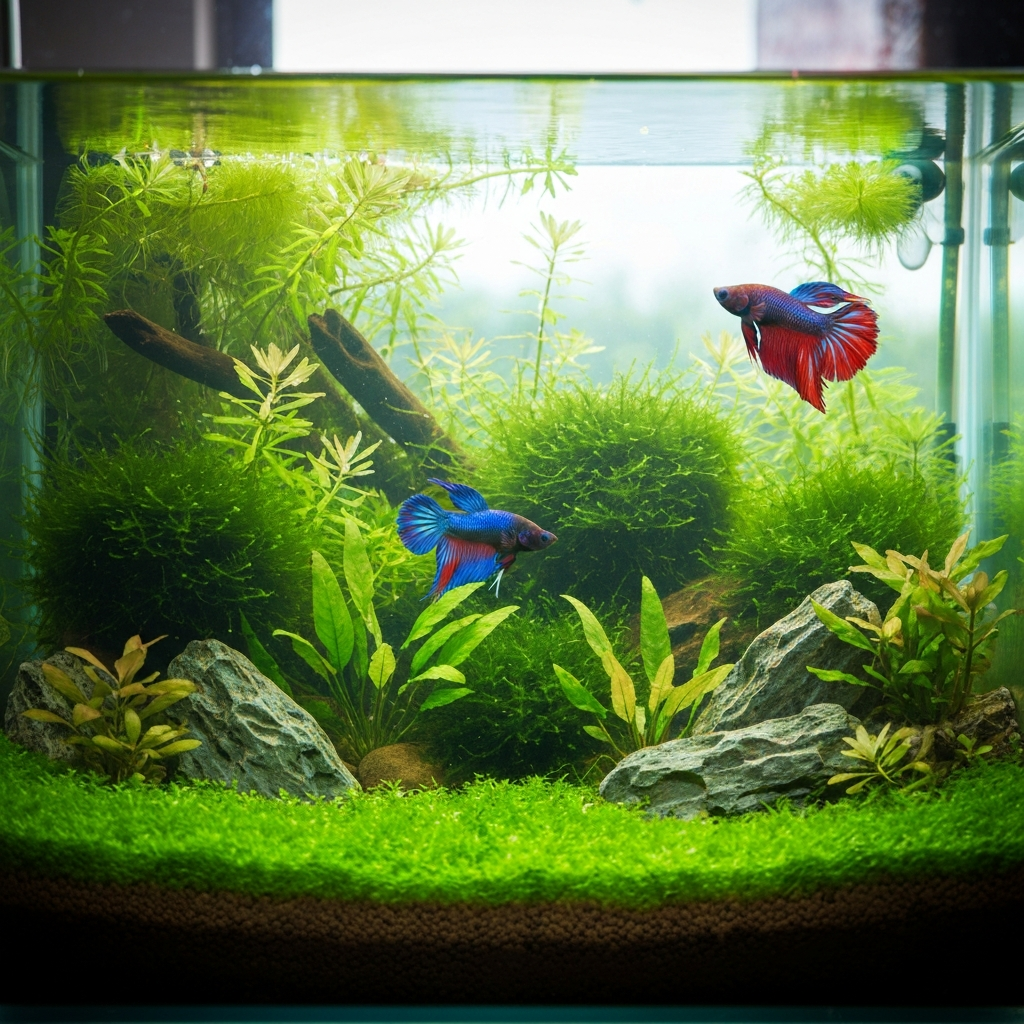
Hey, I'm Alex. When I first got into betta keeping back in 2019, I made so many mistakes. I walked into a big-box pet store, saw those tiny, colorful cups, and then I saw it: a small plastic box, split down the middle with a flimsy piece of clear plastic, marketed as a "Betta Double Deluxe Suite." The box showed two vibrant male bettas, seemingly happy neighbors. I almost bought it. I thought, "Wow, I can have two of these beautiful fish in one small space!"
Thank goodness I hesitated. A quick search on my phone in the store aisle revealed a world of horror stories—fins torn to shreds, one fish dead, the other stressed to the point of illness. I put the box down and walked out, determined to learn the right way. That experience is the foundation of my blog and my philosophy: the fish's health comes first, always. So, if you're searching for a "2 betta fish tank," I'm here to be the friend I wish I had in that store aisle. Let's talk about the only safe way to do it.
Why You Can't Just Put Two Bettas Together
Let's get this out of the way immediately. You cannot, under almost any circumstances, put two betta fish in the same body of water without a barrier. Their common name, Siamese Fighting Fish, isn't just for show.
- Male vs. Male: This is a guaranteed fight to the death. They are incredibly territorial and will see another male as a threat to be eliminated. No exceptions.
- Male vs. Female: This is not a romantic pairing. Unless they are actively breeding in a carefully controlled, temporary setup by an experienced breeder, the male will likely harass, injure, or kill the female.
- Female vs. Female: While you can sometimes keep a group of females (5+) in a large, heavily planted tank (40+ gallons)—a setup known as a "sorority"—putting just two or three together in a smaller tank often results in one dominant female bullying the others to death.
Seeing another betta constantly triggers a stress response. Their bodies are flooded with hormones, they're always on high alert, and this chronic stress weakens their immune system, leading to disease and a shortened lifespan. This is why the solution isn't just preventing fighting, but also preventing constant visual contact.
The Divided Tank: The Only Responsible Solution
So, how do we create a safe and healthy 2 betta fish tank? We use a single, larger tank and divide it into two separate territories. Each fish gets its own space, its own heater, its own filter access, and, crucially, its own privacy. This gives you the joy of watching two unique bettas without the stress and violence.
But not all divided setups are created equal. Those cheap kits are death traps. We're going to build one that's safe, stable, and beautiful.
Step 1: Choose the Right Tank (Size Matters!)
This is the most important decision you'll make. The absolute minimum tank size for a divided setup is a standard 10-gallon tank. I can't stress this enough. Dividing a 5-gallon tank leaves each fish with a miserable 2.5 gallons, which is simply not enough space and creates an unstable environment where water parameters can crash dangerously.
A 10-gallon tank, when divided, gives each betta a 5-gallon territory. This is the accepted minimum for a single betta to thrive. It provides enough swimming space and, more importantly, enough water volume to keep the water parameters (ammonia, nitrite, nitrate) stable. I personally use a standard Aqueon 10-gallon tank for my divided setups. It's affordable, reliable, and the dimensions are perfect for standard dividers.
Aqueon 10 Gallon Standard Glass Aquarium
This is the workhorse of the aquarium hobby for a reason. It's sturdy, affordable, and the perfect footprint for a divided setup. Don't be tempted by smaller, "all-in-one" kits that are too small.
Step 2: The All-Important Divider
The divider is the heart of your 2 betta fish tank. A bad divider is the difference between a successful setup and a tragedy. Here's what to look for and what to avoid:
- AVOID: Flimsy, clear, or mesh dividers. Clear dividers cause constant stress as the bettas will see each other and try to posture and fight through the plastic. Mesh or dividers with large holes can allow fins to be nipped and torn.
- CHOOSE: A solid, opaque, custom-fit divider. This prevents visual contact, reducing stress to near zero. It needs to be cut perfectly to the internal dimensions of your tank to ensure there are no gaps on the sides or bottom where a curious betta could get stuck or slip through.
For years, I tried making my own with craft mesh and report binders. It was a pain, and I never felt 100% secure. Then I discovered purpose-built dividers. My go-to recommendation is the dividers from Life with Pets. They are made from a solid, non-toxic plastic and can be ordered to the exact internal dimensions of an Aqueon 10-gallon tank. They are, without a doubt, the safest and most reliable option I have ever used.
Life with Pets Aquarium Divider (10 Gallon Size)
This is the only divider I trust. It's solid black, preventing visual stress, and fits snugly into a standard 10-gallon tank, leaving no dangerous gaps. The peace of mind is worth every penny.
Step 3: Filtration and Heating for Two
With a divided tank, you have two options for filtration and heating:
- One Powerful System: Use one gentle filter (like a sponge filter) and one adjustable 50-watt heater, placing them on one side of the divider. The small holes in the Life with Pets divider are designed to allow adequate water flow for this. This is the most cost-effective method.
- Two Separate Systems: This is my preferred method for ultimate stability. I use two small sponge filters (one on each side) powered by a single air pump with a gang valve to control flow. I also use two small, 25-watt adjustable heaters. This creates redundancy and ensures both sides have perfectly stable temperatures and filtration.
No matter what, you need an adjustable heater for each side (or one that can heat the whole 10 gallons) to keep the water at a stable 78-80°F (25-27°C). And you need a gentle filter. Betta fins are delicate and can be torn by strong filter intakes.
Aquarium Co-Op Coarse Sponge Filter
Sponge filters are the gold standard for betta tanks. They provide excellent biological filtration with a gentle flow that won't harm delicate fins. Get two small ones for a divided 10-gallon.
Setup Comparison: The Right Way vs. The Wrong Way
To make it crystal clear, here's how a proper setup compares to the common mistakes I see.
| Feature | My Recommended Setup | Pet Store "Duo" Kit | Two Bettas in One Tank |
|---|---|---|---|
| Tank Size | 10 Gallons (5 gal per fish) | ~1-2 Gallons (0.5-1 gal per fish) | Any size is unsafe |
| Divider Type | Solid, Opaque, Secure-fit | Flimsy, Clear, Gaps | None |
| Stress Level | Minimal | Extremely High (visual contact) | Extreme (constant fighting) |
| Heating | Adjustable, Stable 78-80°F | Usually none included | Irrelevant due to fighting |
| Filtration | Gentle Sponge Filter | Often none, or harsh cartridge | Irrelevant due to fighting |
| Outcome | Two healthy, thriving bettas | Stressed, sick, short-lived fish | Injury and death |
Frequently Asked Questions (FAQ)
Can I use a clear divider if I put lots of plants in the way?
I strongly advise against it. Even with plants, your bettas will catch glimpses of each other. This constant "threat" in their peripheral vision causes chronic stress, which is a silent killer. Why risk it? A solid divider completely removes this problem and guarantees peace of mind for both you and your fish.
What if my bettas are "flaring" at the divider?
If you have a solid divider, they shouldn't be able to see each other. If they are flaring, it means there's a light source creating a reflection on the inside of the tank, and they are flaring at their own reflection. This is normal and not harmful in short bursts. However, if they are flaring at the seams of the divider, it means it's not secure. You must fix any gaps immediately.
Can I divide a 5.5-gallon tank for two bettas?
Please don't. That leaves each fish with less than 2.5 gallons of water. In such a small volume, ammonia from their waste builds up incredibly fast, becoming toxic. It's also not enough swimming space. A 10-gallon tank is the absolute, non-negotiable minimum for a responsible divided setup.
Final Verdict: The Responsible Keeper's Checklist
Creating a "2 betta fish tank" can be an incredibly rewarding experience, allowing you to enjoy the personalities of two distinct fish. But it has to be done right. There are no shortcuts.
Here's your checklist for success:
- ✅ Start with a 10-gallon glass tank. No smaller.
- ✅ Buy a solid, opaque, secure-fitting divider. This is not the place to save money.
- ✅ Install the divider securely before adding substrate or water. Make sure there are NO gaps.
- ✅ Provide independent heating and filtration. Aim for a stable 78-80°F and a gentle filter on each side.
- ✅ Cycle your tank! Before adding any fish, you must establish a nitrogen cycle to handle their waste.
- ✅ Decorate each side separately. Give each betta plenty of silk or live plants and a hideout to create a secure territory.
Follow these steps, and you'll have a setup that is not only beautiful but also a healthy, humane, and stress-free home for two magnificent bettas. You'll be able to look at your tank with pride, knowing you did it the right way.