Betta Fish Behavior — Why They Flare, Build Bubble Nests & Recognize You
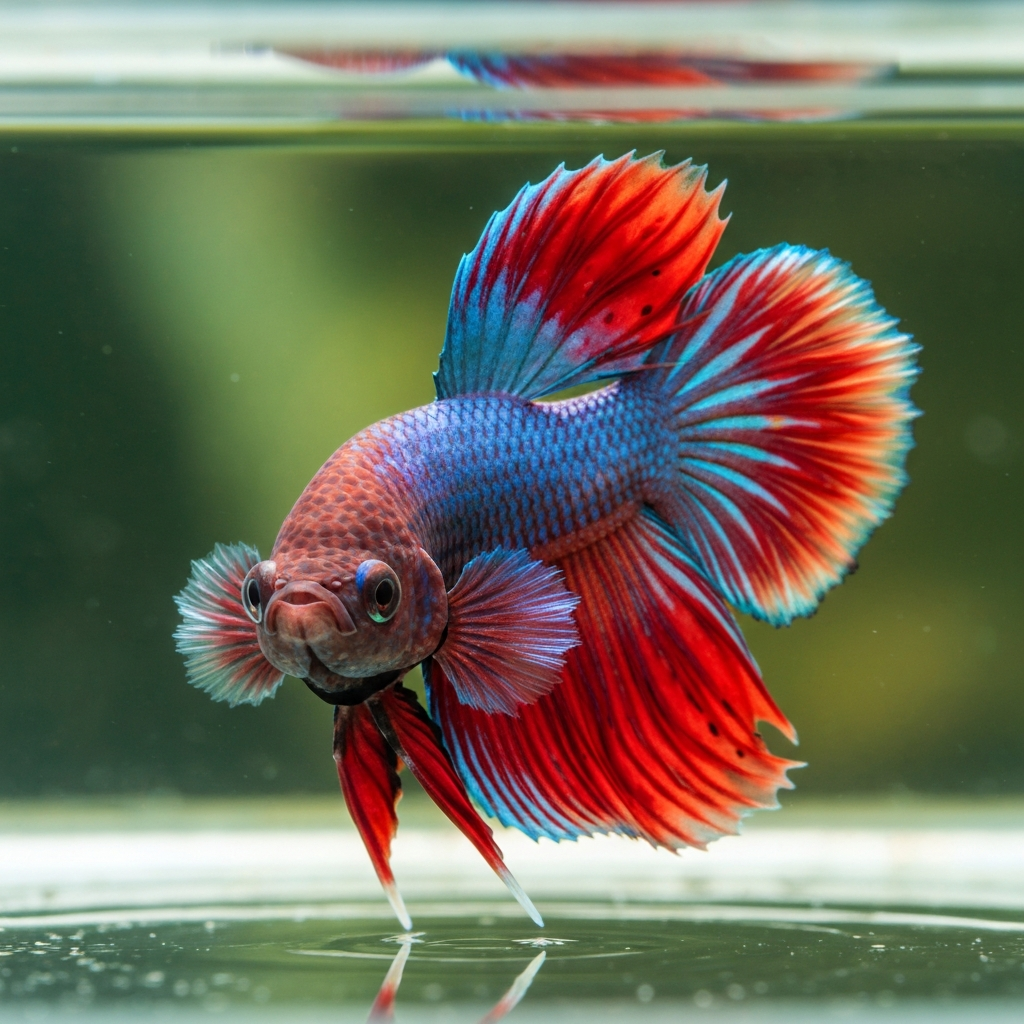
Bettas are weird. I mean that in the best possible way.
One minute mine is flaring at his own reflection like he's about to throw fins. The next, he's floating motionless at the bottom of the tank in a position that looks dead — then darts up to the surface the second I open the food lid. I've kept bettas for over seven years, and I'm still occasionally caught off guard by something new.
That unpredictability is exactly why people fall in love with these fish. A betta isn't just a decoration that drifts around a tank. They have genuine personalities, quirks, and behavioral patterns that you start to recognize over weeks and months of observation.
The problem is, new owners don't know what's normal and what's cause for alarm. Is flaring healthy or stressful? Does a bubble nest mean your betta is happy? Why is he lying on the substrate like a dramatic teenager who just got grounded? I've fielded all of these questions more times than I can count, and this guide is my attempt to answer them in one place.
Here's every betta fish behavior worth understanding — the normal, the weird, and the genuinely concerning.
🐠 Behavior Is Communication
Before you panic about any single behavior, remember this: behavior changes over hours or days are usually environmental. A betta suddenly acting differently almost always correlates with something that changed — new decor, a water parameter swing, a temperature drop, or even just the lights being on too long. Observe patterns, not snapshots. A betta that lies on the bottom for 20 minutes after a water change is different from one that hasn't moved in 48 hours.
Why Do Bettas Flare? The Science Behind the Display
Flaring is the betta's signature move — gill covers flared out, fins spread to maximum width, body tensed. In the wild, male bettas flare to intimidate rivals and establish territory. In your tank, the same instinct fires for a few different reasons.
The main triggers:
- Territorial response: This is the big one. Male bettas are hardwired to defend their space. If your betta flares at you when you approach the tank, or at a snail, or at a neighbor fish through the glass — that's territorial instinct. It's not "aggression" in the emotional sense. It's an automatic response that's kept betta genes alive for millions of years.
- Reflection fighting: Glass tanks act like mirrors, especially when the room is brighter than the tank. Your betta sees his own reflection and perceives a rival. This is the most common cause of excessive flaring. If your betta flares constantly at one specific wall, try changing the tank lighting or adding a background film to break the reflection.
- Mating display: Males flare to impress females during courtship — yes, even if there's no female present. Sometimes they just get the urge. A betta flaring while swimming in broad, showy arcs is probably in breeding mode, not fight mode. You'll also often see a bubble nest nearby when this happens.
- Exercise & stimulation: Here's something most care guides miss: flaring is exercise. In an appropriately sized tank, brief flaring sessions are healthy. Think of it like a dog wagging its tail at the mailman — it's a natural outlet. I let my bettas flare at a mirror for 3–5 minutes a few times a week. It stretches their fins, gets blood flowing, and breaks up the monotony of tank life.
When flaring is a problem: If your betta is flaring nonstop — hours at a time — that's stress, not enrichment. Constant flaring burns energy, suppresses the immune system, and can lead to fin damage. Solve the trigger: add a tank background, move a neighboring tank, or reduce reflective light. A healthy betta flares in bursts, not marathons.
Bubble Nests Explained — What They Actually Mean
Walk into any betta forum and you'll see comments like "He built a bubble nest — he must be so happy!" I used to say the same thing. Then I learned better.
A bubble nest is a sign of sexual maturity, not happiness. Male bettas in the wild build floating nests of bubbles where they'll guard fertilized eggs. It's an instinct — hardwired into their DNA. A betta in a tiny, unfiltered bowl with ammonia burns on his gills can still build a bubble nest. A betta in a pristine 20-gallon planted tank might never build one. Neither case reflects "happiness."
What triggers bubble nest building:
- Sexual maturity: Males typically start building nests around 3–4 months of age. It's hormonal.
- Still water surface: Bettas won't build nests in strong current — the bubbles get destroyed. If your filter output is breaking the surface, you'll rarely see nests even if your betta wants to build one.
- Floating plants or objects: In the wild, bettas build nests under floating vegetation. A betta leaf hammock, floating Indian almond leaf, or even a styrofoam cup cut in half (a common breeder trick) can trigger nest building because it gives the fish an anchor point.
- Water changes: Fresh water often stimulates nest building. I see it consistently after my weekly 25% change. Something about the clean water signals "good breeding conditions."
What a bubble nest does NOT mean: It doesn't mean your betta is well-cared-for. It doesn't mean your tank is perfect. It doesn't mean your water parameters are good. It means your male betta is sexually mature and has a calm enough water surface to attempt nest-building. That's it.
I still love seeing a fresh bubble nest in my tank. It's fascinating behavior. But I don't use it as a health metric. Water parameters, appetite, activity level, and fin condition are what tell me whether a betta is actually thriving.
Do Bettas Recognize Their Owners?
Yes — and I don't say that loosely. After years of observation, I'm convinced bettas can distinguish individual humans.
My current betta, a halfmoon named Atlas, swims to the front glass the moment I enter the room. If my partner walks up to the tank, he doesn't react. If I approach wearing a hat or a hoodie — something that changes my silhouette — there's a noticeable delay before he recognizes me. He follows my finger across the glass. He positions himself under the feeding hole when he sees me reach for the pellet jar.
This isn't unique to my fish. Bettas kept as single specimens learn to associate their keeper with food. But it goes deeper than that. Research on fish cognition shows that bettas can recognize faces and remember them — not through complex facial recognition like humans, but through visual pattern matching. Your shape, your movement patterns, the color of your clothing, and the specific routine of feeding time all get stored in that tiny fish brain.
How to build recognition with your betta:
- Feed at consistent times. This is the fastest way to build an association. Your betta learns that you + the food lid = food.
- Finger-following training. Place your finger on the glass and move it slowly. Many bettas will track and follow it. Some will even flare at it, which is still recognition — they just perceive the finger as a threat.
- Talk near the tank. Bettas can detect vibrations through water. A consistent voice pattern becomes familiar. I'm not saying they understand English, but they absolutely learn that a specific low-frequency vibration means the food human is nearby.
The takeaway: your betta knows who you are. Maybe not in the way a dog does — but enough to swim to the front glass when you walk by. That counts.
Betta Sleeping Habits — Yes, They Actually Sleep
Bettas sleep. They don't have eyelids, so they sleep with their eyes open, and this catches new owners off guard constantly.
What sleeping looks like: A sleeping betta will find a spot — usually a plant leaf, a cave, the substrate, or wedged into decor — and go motionless. Their colors often fade slightly because they're not actively pumping blood through their fins. Their gill movement slows. They don't respond immediately to movement outside the tank.
I've lost count of how many panicked messages I've seen that read "I think my betta is dead." Then the person taps the glass, the fish darts up, and suddenly everything is fine. That's just a betta that was sleeping hard.
Weird sleeping positions that are totally normal:
- On their side — looks terrifying, is completely normal. Bettas sometimes sleep sideways on the substrate or a plant leaf like they've given up on life. They haven't.
- Wedged behind the filter intake — the gentle suction holds them in place and they don't have to expend energy staying still. As long as they can easily swim away, this is fine.
- Vertical, nose-up or nose-down — especially in planted tanks where they rest against a stem. Looks like swim bladder disorder. Is actually just a weird sleeping posture.
- Curled in a U-shape — bettas are flexible. Sometimes they sleep bent into positions that look broken.
How to tell sleep from sickness: A sleeping betta wakes up when you gently approach or tap the glass. A sick betta doesn't. A sleeping betta has normal colors when awake. A sick betta looks pale or clamped even when active. Most importantly, a sleeping betta has normal behavior the rest of the day — eating, swimming, exploring. A sick betta doesn't do those things.
Give your betta 8–10 hours of darkness at night. A tank light on a timer is ideal. Constant light stresses them out — imagine trying to sleep with a spotlight on your face 24/7.
Why Is My Betta Laying on the Bottom of the Tank?
This is probably the most panicked question I get, so let's break it down clearly.
There are two completely different scenarios here, and telling them apart is the difference between "go about your day" and "this is an emergency."
Scenario 1: Normal resting (not a problem)
- The betta rests on the bottom for periods, then swims normally
- Responsive when you approach — maybe swims up to greet you
- Eating normally when food is offered
- Colors look good, fins aren't clamped
- More common in long-finned varieties (halfmoons, rosetails) because dragging those fins around is exhausting
Long-finned bettas especially get tired. Those massive tails are like swimming in a wedding dress. Resting on the substrate, on a plant leaf, or on a betta hammock is completely expected — in fact, I'd be more concerned about a halfmoon that never rests.
Scenario 2: Lethargy from illness (a problem)
- The betta is on the bottom constantly — hours or days without moving
- Unresponsive to food or your presence
- Clamped fins, pale colors, labored breathing
- Refusing food for more than a day
- May be accompanied by other symptoms: bloating, pineconing scales, white spots
If you're seeing Scenario 2, test your water immediately. Ammonia or nitrite poisoning causes extreme lethargy. Low temperature (below 74°F) also slows bettas down dramatically — their metabolism is temperature-dependent, and a cold betta is a sluggish betta. If water parameters and temperature check out and the fish is still lethargic, you're likely looking at an internal infection. Move to a hospital tank and start broad-spectrum antibiotics.
When in doubt, observe for 24 hours. A betta that rests and then moves is normal. A betta that doesn't move at all needs intervention.
Glass Surfing and Pacing — What's Behind the Repetitive Swimming
Glass surfing — swimming repetitively up and down or back and forth along the glass — is one of those behaviors that makes owners uncomfortable because it looks neurotic. And sometimes, it is.
Common causes:
- Reflection chasing: This is the #1 cause. The betta sees its reflection and tries to confront the "rival." It's the same instinct as flaring, expressed through movement instead of display. Solve this with a tank background or adjusting room lighting so the tank interior is brighter than the room.
- Boredom and understimulation: A betta in a bare tank with no plants, no hides, and nothing to interact with will pace. They're intelligent fish. Imagine being locked in an empty room with nothing to do — you'd pace too. Add plants (live or silk), a cave, Indian almond leaves, anything that creates complexity.
- Stress from new environment: A betta moved to a new tank will glass-surf for the first few days. This is normal acclimation behavior. It should taper off within 3–5 days.
- Seeing another fish: If your betta can see a tank mate it doesn't like, or a fish in a neighboring tank, expect glass surfing on that side of the tank. Bettas don't "get used to" visual rivals — the stress is chronic.
When to worry: Occasional glass surfing, especially after a water change or during reflections, is fine. Constant pacing for hours every day is chronic stress. A chronically stressed betta has a suppressed immune system — it's the fish that "mysteriously" gets fin rot or velvet with no obvious trigger. Fix the underlying cause before it manifests as disease.
I once had a betta who glass-surfed obsessively for two weeks. I couldn't figure out why — parameters were perfect, no reflections, plenty of plants. Then I realized the tank was next to a window, and birds landing on the sill outside were terrifying him. Moved the tank. Problem solved. Sometimes the trigger is something you'd never think to look for.
Betta Fish Personalities — Every Fish Is Different
This is the thing about bettas that keeps me coming back. After seven years and dozens of fish, I can tell you with absolute certainty: no two bettas have the same personality.
I've had bettas that would flare at anything — my face, the gravel vacuum, a floating piece of duckweed. I've had bettas so shy they'd hide behind the filter the moment I entered the room, only emerging for food. I've had bettas that were lazy to the point of comedy, resting on every available surface like the tank was a day spa. And I've had bettas that were endlessly curious, following my hand during water changes and inspecting every new plant leaf individually.
The personality spectrum I've observed:
- The Aggressive One: Flares at everything. Glass, fingers, snails, plants that move the wrong way. These bettas are great entertainment but need careful tank mate selection — some are so territorial they can't live with anything, including shrimp. They also tend to be the most interactive with owners.
- The Curious One: Always exploring. Inspects new decor immediately. Follows your hand during maintenance. These fish are the most rewarding to keep because they're always doing something interesting. They also benefit the most from enrichment.
- The Shy One: Hides when you approach. Takes weeks to stop darting away during feeding. These bettas need heavily planted tanks with lots of cover. The good news: shy bettas often become bold once they settle in — sometimes it takes 2–3 months, but the transformation is incredible to watch.
- The Lazy One: Finds a comfy spot and barely moves. Especially common in long-finned varieties. As long as the fish is eating, responsive, and has good colors, laziness is a personality trait, not a health issue. Add resting spots near the surface so the lazy betta doesn't have to work too hard for air.
Your betta's personality will emerge over the first 2–4 weeks. The fish you bring home from the store is stressed, disoriented, and in survival mode. The fish you'll have a month later — once it's settled, fed regularly, and comfortable — is the real one. Be patient.
Weird Betta Behaviors Explained — Jumping, Tail Biting, and Refusing Food
Some betta behaviors are so strange they look like medical emergencies. Most of them aren't. Some of them are. Here's a quick field guide to the weirdest stuff I've seen.
Jumping: Bettas are natural jumpers. In the wild, they jump between shallow pools during the dry season. In captivity, they jump for a few reasons: poor water quality (trying to escape), seeing something above the water line they want to investigate (a bug, a light reflection), or pure instinct. Always keep a lid on your betta tank. I learned this the hard way with a plakat who launched himself out of a 1-inch gap. He survived, but many don't.
Tail biting: Some bettas bite their own tails — especially long-finned varieties. The fish literally turns around and rips chunks out of its own caudal fin. It looks like severe fin rot but happens overnight. Why do they do it? Nobody knows for certain, but the leading theory is that heavy fins are frustrating to drag around, so they trim them. Boredom, stress, and genetics also play a role. Tail biting is hard to stop once it starts. Increasing cover, lowering filter flow, and adding enrichment sometimes helps. So does keeping the water pristine to prevent infection in the damaged tissue.
Refusing food: A betta that skips a meal isn't necessarily sick. They can go several days without food with no harm. Common non-medical reasons for food refusal: they're full (you're overfeeding), the food is stale (pellets lose smell after a few months of being opened), they're constipated, or they're stressed from a recent change. If refusal goes past 3 days with no other symptoms, try a different food. If it goes past 5 days or is accompanied by lethargy or clamped fins, start investigating illness.
Zoomies: Random bursts of rapid swimming around the tank, often after lights-out or after a water change. This is normal. Think of it as a fish version of the zoomies a dog gets after a bath. As long as the fish isn't crashing into decor, it's just blowing off steam.
Enrichment Ideas — Keeping Your Betta Mentally Stimulated
Bettas are intelligent predators that spend their days hunting, patrolling, and investigating. In a glass box, that natural drive has nowhere to go unless you provide outlets. Enrichment isn't optional — it's the difference between a betta that exists and one that thrives.
Mirror exercise (3–5 minutes max): A small mirror held against the glass triggers flaring. Do this 2–3 times per week for a few minutes. It's the betta equivalent of a treadmill session — cardiovascular exercise and mental stimulation in one. Don't leave a mirror on the tank permanently. That's not exercise — that's chronic stress.
Live food hunting: Drop a few live blackworms, daphnia, or brine shrimp into the tank and watch your betta transform into a hunter. The stalking, chasing, and capturing behavior is the most natural thing a captive betta can experience. It also provides nutritional variety. I feed live daphnia once a week and the difference in my betta's engagement level for the next 24 hours is noticeable — he patrols the tank looking for more.
Rearranging decor: Every few weeks, move a plant, rotate a piece of driftwood, or add something new (a dried Indian almond leaf, a floating plant, a smooth river rock). The betta treats the changed tank like a new environment and will spend hours re-exploring — swimming through new gaps, checking new surfaces, re-mapping the territory.
Floating toys: A ping pong ball floating on the surface gives bettas something to investigate and nudge. Some bettas ignore it. Others push it around obsessively. Either way, it's a $1 enrichment item worth trying. Just make sure it's clean and hasn't been treated with anything.
Laser pointer play: Like a cat, some bettas will chase a laser pointer dot on the substrate. This one is divisive — some keepers worry it frustrates the fish because they can't "catch" it. I use it sparingly, always ending the session with a food reward near where the dot was last, so there's some resolution. If your betta seems stressed rather than engaged, skip this one.
What NOT to do: Don't tap the glass. It's not enrichment — it's startling. The vibrations are disorienting to a fish, and the repeated stress adds up. Don't leave a mirror in the tank. Don't use enrichment items that could leach chemicals (painted objects, anything with sharp edges, unsealed ceramics).
The goal with enrichment isn't to entertain yourself — it's to give your betta a life that approximates the mental stimulation it would get in the wild. A betta that hunts, patrols, investigates, and flares occasionally is a betta with a functioning brain. A betta that floats in the same corner for 23 hours a day is a betta that's given up.
Related Guides
Alex Rivera
Betta keeper since 2019. I've kept dozens of bettas across every tail type and personality spectrum. I write honest, experience-backed guides — no fluff, no pet store myths.