How to Breed Betta Fish — The Complete Step-by-Step Guide
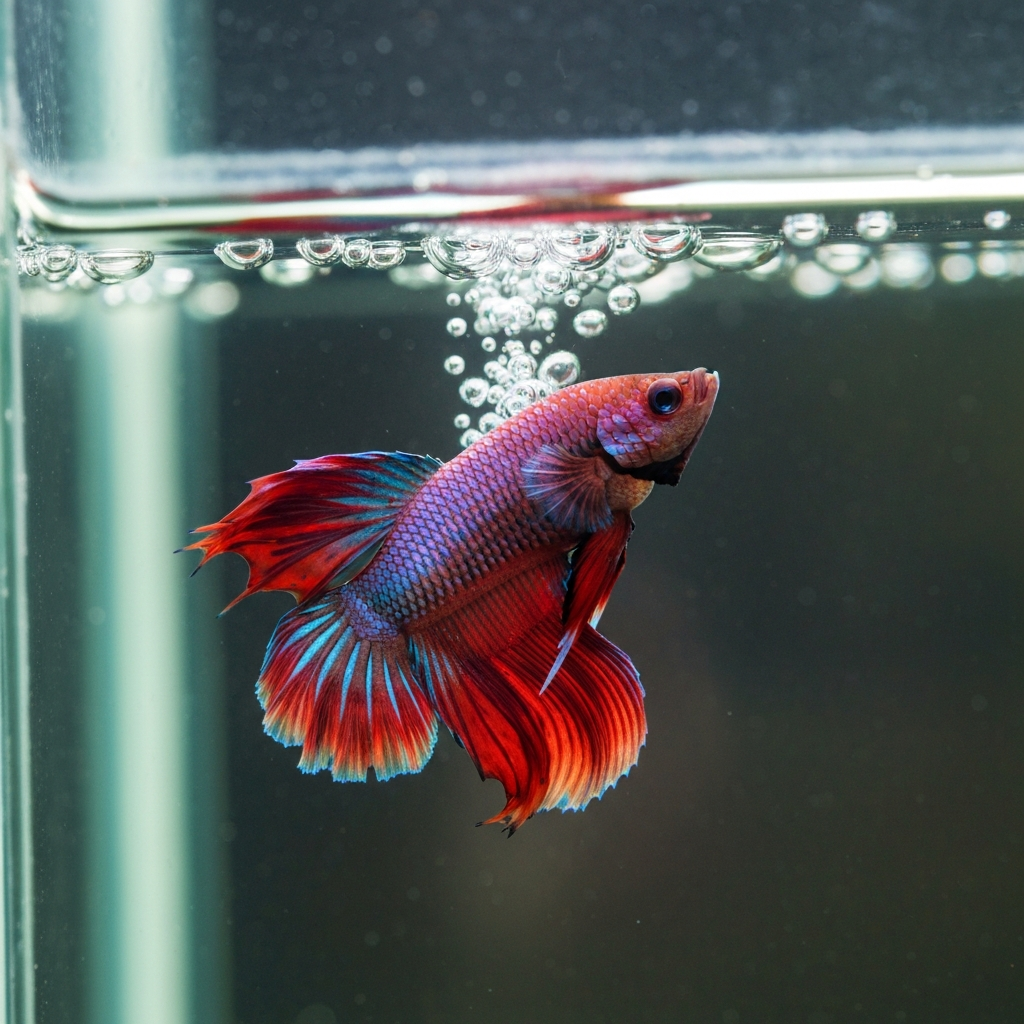
I bred my first pair of bettas in 2021. A gorgeous red dragon male and a blue-rimmed female I'd ordered from a breeder in Thailand. I'd read every guide, watched dozens of YouTube videos, and set up what I thought was the perfect breeding tank.
The male built a bubble nest within 24 hours. Released the female. They embraced. Eggs everywhere. I was ecstatic.
Three days later, the male ate every single egg. I stared at an empty nest for ten minutes, then went to bed angry.
That's the thing about breeding bettas — the guides make it sound like a beautiful dance of nature. What they don't tell you is that everything can go wrong, often for reasons nobody warns you about. This guide is what I wish I'd had: every mistake I made, every lesson I learned, and exactly how to do it right.
Is Breeding Bettas Right For You?
Before you order a breeding pair, read this section carefully. I'm not trying to discourage you — I just want you to know what you're signing up for.
A single successful spawn produces 50 to 100 fry. Sometimes more. Each of those fry needs its own container by the time it's 8 to 10 weeks old — male bettas cannot be housed together or they will fight to the death. That means 50 separate jars, each heated to 78–80°F, each needing daily water changes.
Let me put that in practical terms: if you get 60 fry to the jarring stage, you'll spend roughly two hours every single day feeding, cleaning, and maintaining individual containers. For three to four months until they're ready to sell or give away.
Then there's the cost. A breeding setup — 10-gallon spawning tank, heater, sponge filter, live food cultures, grow-out tanks, jars, heaters for jars, air pumps, brine shrimp hatchery — runs $200 to $400 minimum. You'll spend another $50 to $100 a month on live food cultures alone.
And after all that? You have 50+ bettas that need homes. Pet stores might take them for $1–$3 each in store credit. You can sell online, but shipping live fish is expensive and stressful. Most hobby breeders I know end up giving away half their spawn to friends and local aquarium clubs.
If you're still reading, great. You're the kind of person who should breed bettas — someone who knows it's hard and wants to do it anyway.
Selecting Your Breeding Pair
The quality of your pair determines the quality of your spawn. Don't grab the prettiest betta at Petco and pair it with the first female you find — you'll end up with weak, dull-colored fry that nobody wants.
Age matters. Both fish should be between 4 and 12 months old. Younger than 4 months and they may not be sexually mature. Older than 12 months and fertility drops, plus older males sometimes lose interest in spawning. The sweet spot is 6 to 8 months — old enough to produce strong gametes, young enough for a vigorous spawn.
Health is non-negotiable. Examine both fish carefully. They should have clear eyes, intact fins with no signs of rot or clamping, and active, curious behavior. No white spots, no velvet, no bloating. A stressed or sick betta won't spawn — and if it somehow does, the fry will be weak. Quarantine new fish for at least two weeks before introducing them to your breeding setup.
Choose complementary traits. If you want blue offspring, breed two blues. If you want metallic dragons, breed two dragons. Crossing a red veiltail with a blue halfmoon will give you a grab bag of unpredictable fry — which is fine if you're experimenting, but don't expect show-quality fish. Stick with the same tail type and color line for your first spawn.
Where to get breeding stock: big-box pet store bettas are mass-bred and genetically weak. I've had much better results ordering from dedicated breeders — look for sellers on Aquabid, eBay with good reviews, or local fish clubs. Expect to pay $20–$50 per fish for quality stock. The female in particular is hard to find at chain stores, where they rarely stock healthy females.
Setting Up the Breeding Tank
The breeding tank is not a permanent home. It's a controlled environment designed specifically for spawning. Here's exactly what you need:
Tank: a 10-gallon standard tank. You can use a 5-gallon in a pinch, but the extra space in a 10-gallon gives the female room to escape if the male gets aggressive. Fill it with only 4 to 5 inches of water — shallow water helps the male collect falling eggs and return them to the bubble nest. More importantly, it reduces the distance fry must swim to reach the surface for their first gulp of air.
Heater: set to 80–82°F (27–28°C). This is warmer than a standard betta tank. The elevated temperature triggers spawning behavior and speeds up egg development. Use an adjustable heater with a separate thermometer — don't trust the built-in dial.
Filtration: a small sponge filter powered by an air pump, set to the lowest possible flow. No HOB filters, no internal power filters — any current will destroy the bubble nest. The sponge should barely trickle. For the first few days after spawning, some breeders turn the filter off entirely and rely on daily small water changes. If you do this, make sure the tank is fully cycled beforehand.
Indian almond leaf: add one large leaf or two small ones. The tannins darken the water, lower pH slightly, and have mild antibacterial properties. Dark water mimics the betta's natural breeding habitat and seems to encourage spawning. It also helps prevent fungus on eggs.
Nest anchor: cut a styrofoam cup in half vertically and float it on the surface. The male will build his bubble nest underneath it. The cup gives the nest structure and prevents it from scattering. Some breeders use a piece of bubble wrap instead — either works. Floating plants like water sprite or hornwort are a good addition for cover, but keep the floating cup — it's the most reliable nest anchor I've found.
No substrate. Leave the bottom bare. It makes cleaning uneaten food and dead fry easier. Live plants in pots are fine, but don't use planted substrate.
Divider: you'll need a clear divider to separate the male and female during conditioning. A piece of glass or acrylic with small holes for water flow works perfectly.
Conditioning the Pair
Conditioning is the most important step most beginners skip. You can't just drop two bettas in a tank and expect them to spawn. They need to be in peak physical condition, and they need to see each other.
Place the male on one side of the divided breeding tank and the female on the other. They should be able to see each other through the clear divider. The male will start flaring and building a bubble nest. The female will develop vertical breeding bars — dark stripes on her body that signal receptivity. If the female doesn't show bars after a week, she's not ready.
Feed live foods exclusively during conditioning. I feed bloodworms, blackworms, and adult brine shrimp — twice a day for 7 to 14 days. Live foods trigger the hormonal response that leads to spawning. Frozen foods are second-best. Dry pellets won't cut it for conditioning — the nutritional density isn't high enough. The female especially needs the extra protein to develop eggs.
You'll know the female is ready when her belly swells noticeably with eggs and she shows vertical breeding bars when near the male's side of the divider. The male is ready when he's built a substantial bubble nest — at least 2–3 inches across, ideally covering the entire area under the floating cup.
Conditioning typically takes 10 to 14 days. Don't rush it. An under-conditioned pair will either refuse to spawn or produce a small, weak clutch.
Introducing the Pair
This is the moment of truth. Done wrong, the male can kill the female in minutes. Use the chimney method.
The chimney method: remove the divider, but place the female inside a clear chimney — a plastic bottle with the top and bottom cut off, or a glass hurricane lamp, or even a large mason jar. Place the chimney upright in the breeding tank so water flows through it but the female can't escape and the male can't reach her.
The male will immediately investigate. He'll flare at the chimney, circle it, and display. The female will either flare back or — ideally — lower her head, tilt slightly, and show her breeding bars. This submissive posture tells the male she's receptive, not aggressive.
Watch them for at least an hour before releasing the female. If the male attacks the chimney relentlessly and the female hides at the bottom showing stress stripes (horizontal, not vertical), she's not ready. Remove her and condition for another few days.
If the interaction is calm — circling, displaying, no violent attacking — gently tip the chimney to release the female. Stay and watch. If the male immediately attacks and the female doesn't submit, separate them within seconds. You can try again with a different chimney or after more conditioning.
In most successful spawns, the male will chase the female briefly, she'll retreat, he'll return to his nest, and they'll repeat this dance for anywhere from 30 minutes to several hours before spawning begins.
The Spawning Process
When the pair is ready, the male will lead the female under the bubble nest. He'll wrap his body around her in what's called the "nuptial embrace." It looks violent — he squeezes her midsection, and both fish shudder — but it's normal.
During each embrace, the female releases 5 to 15 eggs, which the male simultaneously fertilizes. The eggs are white, tiny, and sink immediately. The female goes limp for a few seconds after each embrace — she's stunned, not dead. Don't panic.
While the female recovers, the male frantically collects the sinking eggs in his mouth and blows them back up into the bubble nest. This is why shallow water matters — in deep water, the eggs sink too fast for the male to catch them all.
The pair will embrace 10 to 30 times over a period of 2 to 6 hours. A large female can release 300+ eggs in a single spawn, though 50–150 is more typical. The male does most of the work collecting and organizing eggs between embraces.
When the female stops producing eggs and retreats to a corner, the spawn is complete. The male will chase her away from the nest — this is your cue.
Removing the Female
Remove the female immediately after spawning ends. I cannot stress this enough. The male will now guard the nest and see the female as a threat. He can and will kill her. I've seen it happen — a male that spawned peacefully for two hours turned on the female and shredded her fins in under a minute.
Move the female to a separate, heated recovery tank. She'll be exhausted, her fins may be slightly torn from the embraces, and she'll need a few days of high-quality food to recover. Add an Indian almond leaf or a dose of StressGuard to prevent infection. Feed her generously — live foods if possible. She'll regain condition within a week.
Do not put her back in the breeding tank. Do not try for a second spawn immediately. Give her at least 2 to 3 weeks of recovery before considering another attempt.
Caring for the Male and Eggs
Once the female is out, the male takes over completely. He'll spend the next 48 to 72 hours tending the bubble nest — catching falling eggs, blowing new bubbles to reinforce the nest, and removing any eggs that turn white (fungused or infertile). This is exhausting work for him. Do not feed the male during this period. He won't eat and uneaten food will foul the water.
The eggs hatch in 24 to 36 hours. You'll see tiny tails hanging down from the nest — the fry are vertical at this stage, still absorbing their yolk sac. They don't need food yet. The male will continue catching any that fall and spitting them back up. This is the most critical period: if the male gets spooked or decides the task is too much, he may eat the fry. Keep the tank in a quiet area. No tapping the glass. No sudden lights.
At 3 to 4 days post-hatch, the fry become free-swimming — they leave the nest and swim horizontally. This is when you remove the male. If you leave him in, he may eat the fry, confusing them for falling eggs that need to be collected (or simply deciding they're food). Move the male back to his own tank and feed him well — he's earned it.
Raising Betta Fry
This is the hardest part. Most people who successfully spawn bettas lose their fry in the first two weeks. Here's how to avoid that.
Days 1–7 (free-swimming begins): the fry are tiny — about 3mm long. They need infusoria, the smallest live food available. You can culture infusoria by putting a lettuce leaf or hay in a jar of tank water in a sunny window — within 3 to 4 days, the water clouds with microscopic organisms. Use an eyedropper to squirt infusoria near the fry 3 to 4 times a day. Feed small amounts — uneaten infusoria will foul the water fast.
Days 7–21: graduate to baby brine shrimp. You'll need a brine shrimp hatchery — a $15 kit with a cone and air pump works perfectly. Start a new batch every day so you always have freshly hatched nauplii. The fry will grow rapidly on baby brine shrimp. Feed 3 to 4 times a day in small amounts. Also introduce microworms around day 10 — they're easy to culture in a plastic container with oatmeal and yeast.
Water changes: this is where beginners fail. Fry tanks foul incredibly fast from uneaten food. Do a 10–15% water change every single day using airline tubing as a siphon. The tubing is narrow enough that it won't suck up fry — but always check the bucket afterward for stragglers. Temperature-match the new water and treat it with conditioner. Use a drip system or pour very slowly to avoid shocking the fry.
Weeks 3–8: the fry grow quickly. By week 4 they'll start showing color. By week 6 you can introduce crushed pellets and finely chopped frozen bloodworms alongside live foods. At weeks 3–4, you may need to move them to a larger grow-out tank to prevent stunting. A 20-gallon long with a gentle sponge filter works well.
Jarring (weeks 8–10): once the fry reach about 1 inch and the males start showing aggression — flaring, nipping, chasing — they must be separated. Each male gets his own container. I use 1-gallon glass jars, but 16-ounce deli cups work in a pinch if you change water daily. Every jar needs its own heater or must be on a heated shelf system maintaining 78–80°F. Females can stay together in a sorority tank with heavy planting, but watch for aggression — some females are as mean as males.
Finding Homes for 50+ Bettas
You've raised them. Now what?
Local fish stores: visit in person, bring photos of your best fish, and ask if they buy from local breeders. Most will offer store credit of $1–$3 per fish. Cash offers are rare for unproven stock. Be professional — bring healthy, jarred fish in clean containers, not sickly ones in cloudy water.
Online sales: platforms like Aquabid, eBay, Etsy, and r/AquaSwap on Reddit work well for quality bettas. Good photos and honest descriptions are everything. You can charge $10–$30 per fish online, but factor in shipping costs ($15–$40 via USPS Priority with heat packs). Learn to ship fish properly — breather bags, insulated boxes, and seasonal temperature awareness are non-negotiable.
Giving them away: local aquarium clubs, friends with established tanks, and Facebook aquarium groups are great outlets. Be upfront about the fish's needs. Don't give a betta to someone who plans to put it in a bowl.
Ethical culling: this is the hardest topic in breeding, and I won't sugarcoat it. Not every fry is healthy. Some have bent spines, missing fins, or deformities that mean they'll never thrive. Culling severely deformed fry is kinder than letting them suffer. Clove oil is the accepted humane method. If you can't bring yourself to cull, betta breeding may not be for you — and that's okay.
Common Breeding Problems
Here's what goes wrong, and how to handle it:
Male won't build a nest. Check the temperature — it needs to be 80°F or higher. Add more Indian almond leaf. Make sure there's zero current disturbing the surface. Some males just take longer; give him 5 to 7 days before giving up.
Female is too aggressive. If the female attacks the male instead of submitting, she's either not conditioned enough or simply incompatible. Try conditioning her for another week. Some females are just aggressive — if she shreds the male's fins during introduction, remove her and find a different female. Don't force a spawn between incompatible fish.
Male eats the eggs. This is the most frustrating outcome and it happens a lot. Common causes: the male is young/inexperienced (first-time spawners often fail), the tank is too bright or noisy, water quality is poor, or the eggs are infertile. If it happens, let the pair rest for two weeks and try again in a quieter, darker room. Some males need three or four attempts before they get it right.
Eggs turn white and fungus. Infertile eggs fungus within 24 hours. A few white eggs in a nest of hundreds is normal — the male will remove them. If the entire nest funguses, the spawn failed (eggs weren't fertilized). Try a different male or condition both fish longer.
Fry die-off at day 5–10. Almost always starvation or water quality. If you're not feeding infusoria frequently enough, fry starve within days of absorbing their yolk sac. If you're overfeeding and not doing water changes, ammonia spikes kill them. Daily small water changes and 4 feedings a day are the price of admission for raising fry. There are no shortcuts.
Breeding bettas is the most rewarding and most frustrating thing I've done in this hobby. Watching a bubble nest fill with wriggling fry — then, weeks later, seeing those same fry develop into jewel-colored miniature versions of their parents — is genuinely incredible.
But it's not for everyone. You need space, time, money, and a willingness to fail before you succeed. My first two spawns were total losses. My third gave me 12 surviving adults out of 80 eggs. By my fifth spawn, I was consistently raising 40 to 60 healthy fish per clutch.
If you're patient, methodical, and willing to learn from your mistakes, you can do this. Just go in with your eyes open — and have a plan for those 50 jars before your first fry are free-swimming.
Related Guides
Alex Rivera
Betta keeper since 2019. I've bred five spawns, lost hundreds of fry, and learned something new every time. If I can breed bettas in a one-bedroom apartment, you probably can too.