Betta Fish FAQ — 20 Questions Every New Owner Asks

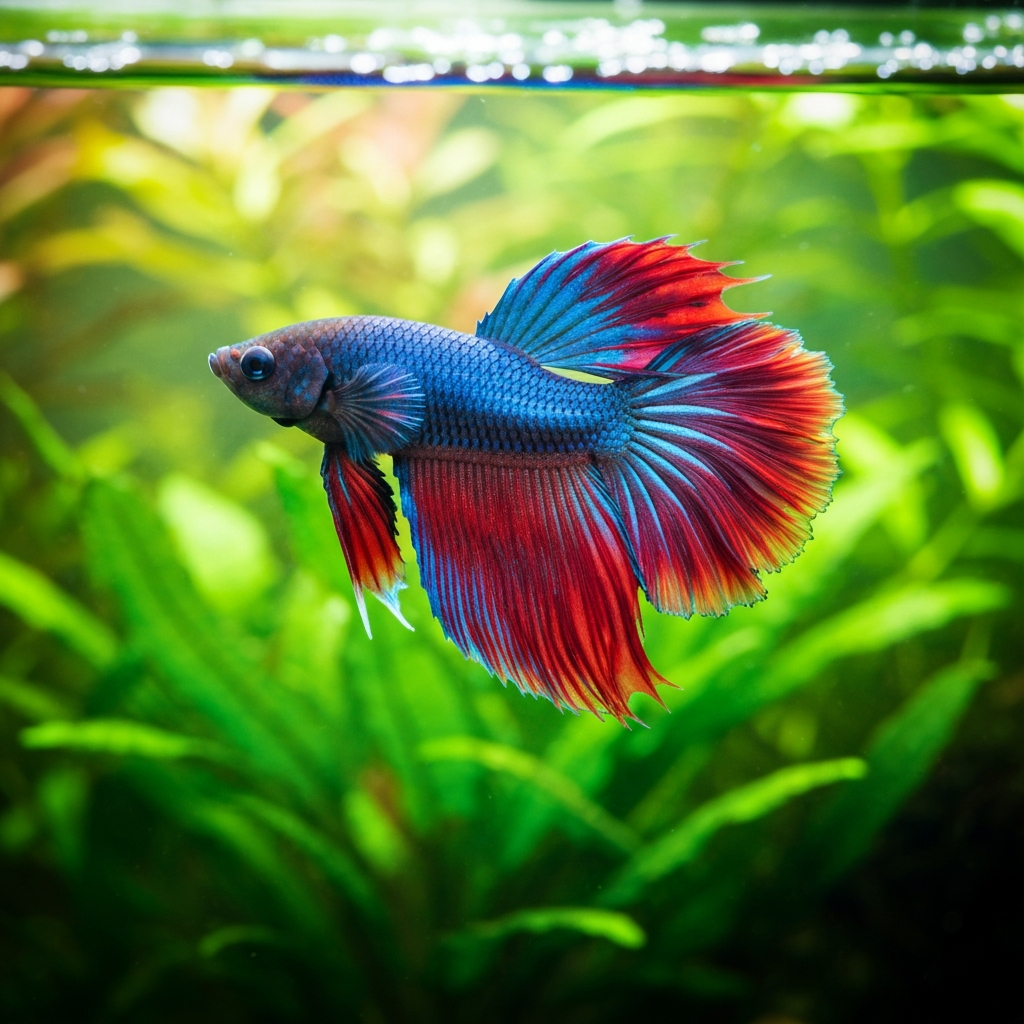
When I bought my first betta, I had about fifty questions and the pet store employee had about three answers — two of which were wrong. That's the reality for most new betta owners. You walk out with a beautiful fish and a head full of conflicting advice from Google, Reddit, and a teenager in a blue polo shirt.
This FAQ is everything I wish I could hand to someone who just brought home their first betta. Twenty questions. Straight answers. No sugarcoating. No upselling. Just what actually works, backed by years of keeping these fish — and making plenty of mistakes along the way.
Whether you're researching before buying, troubleshooting a problem, or just curious about that weird thing your betta does, you'll find the answer here.
How long do betta fish live?
In a properly maintained aquarium, betta fish live an average of 3 to 5 years. That's the realistic, middle-of-the-road number most keepers can expect with good care — heated water, a cycled tank, weekly maintenance, and quality food.
With exceptional care, some bettas push past that average. I've seen well-documented cases of bettas reaching 6 and even 7 years old. These are usually fish kept by experienced aquarists who are meticulous about water quality, feed a varied carnivore diet, and catch health issues early. Genetics matter too — bettas from ethical breeders with diverse gene pools tend to outlast mass-produced pet store fish that have been inbred for color and finnage at the expense of overall health.
The single biggest factor that shortens betta lifespan? Poor water quality. A betta in an unheated, unfiltered bowl rarely lives past 6 to 12 months. Ammonia burns their gills. Cold water suppresses their immune system. They don't die of old age — they die of organ failure and secondary infections that their body can't fight off. If you want your betta to reach its full potential, invest in a proper setup from day one. A heater, a filter, and five gallons of water will triple your betta's lifespan compared to a bowl.
Can betta fish live together?
The short answer: no. Male bettas cannot be housed together under any circumstances. They were selectively bred for generations in Thailand specifically for their aggression — the fish were fought for sport, and the most combative males were prized and bred. Two male bettas in the same tank will fight viciously, locking jaws, shredding fins, and in most cases, one or both will die. Even visual contact through a glass divider can cause enough stress to weaken their immune system and lead to illness.
Female bettas are less aggressive than males, but they're still territorial fish. A sorority — a group of 5 or more female bettas in a heavily planted 20+ gallon tank — is sometimes possible, but it's considered advanced fishkeeping for a reason. Sororities frequently collapse. The pecking order is unstable. One female gets targeted, stress skyrockets, and within days you have a dead or dying fish. You need backup tanks ready to pull out bullied individuals. Even experienced keepers with perfectly scaped tanks have sororities fail. For 99% of betta owners, the rule is dead simple: one betta per tank. If you want multiple fish, set up multiple tanks — it's safer, less stressful for everyone involved, and you get to enjoy the full personality of each individual betta without the constant anxiety of a fight breaking out.
What size tank does a betta need?
The minimum tank size I recommend — and what the betta-keeping community has largely settled on — is 5 gallons (roughly 19 liters). This isn't an arbitrary number. Five gallons is the smallest volume of water that can maintain reasonably stable parameters: temperature doesn't swing wildly when your thermostat kicks on at night, ammonia doesn't spike to lethal levels within 24 hours of a missed water change, and there's enough physical space to fit a small adjustable heater and a low-flow filter without turning the tank into a cramped equipment closet.
Anything smaller — those 0.5-gallon cubes, 1-gallon bowls, and 2.5-gallon "betta kits" sold at chain stores — is a death trap in slow motion. The water chemistry in a tiny container is a rollercoaster. Ammonia builds up in hours. Temperature fluctuates with room temperature. There's no room for a filter or heater. Your betta survives — for a while — but it's not thriving, and eventually the accumulated stress catches up in the form of fin rot, dropsy, or a sudden death you can't explain.
If you have the space and budget, a 10-gallon tank is even better. More water volume means even greater stability, fewer water changes, and room to add a few compatible tank mates like snails or corydoras catfish. Your betta will use every inch. Just avoid tall, narrow column tanks — bettas need to surface periodically to breathe from their labyrinth organ, and swimming vertically through a tall column of water is exhausting for a fish with long, heavy fins.
Do betta fish need a heater?
Yes, absolutely. This is the piece of equipment that beginners skip most often, and it's the #1 reason their betta dies within the first month. Bettas are tropical fish native to the warm, shallow waters of Thailand, Cambodia, and Vietnam — regions where water temperatures stay in the 78–82°F range year-round. Your living room is probably 68–72°F. That's a ten-degree gap, and to a cold-blooded animal whose entire metabolism depends on environmental temperature, it's enormous.
A cold betta is easy to spot: it's lethargic. It hides in corners or behind the filter. It stops eating. Its colors look dull and washed out. Internally, its metabolism has slowed to a crawl — digestion grinds to a halt, waste builds up, and its immune system barely functions. That's when the opportunistic infections move in. Fin rot. Ich. Columnaris. Things a healthy, warm betta would shrug off become life-threatening.
Get an adjustable heater, not a preset one. Preset heaters are cheap, but they're notorious for being inaccurate — the "78°F" preset might actually hold your tank at 74°F or spike it to 84°F. Spend the extra ten dollars. A 25-watt adjustable heater is perfect for a 5-gallon tank; go with 50 watts for a 10-gallon. And always, always pair it with a glass thermometer. Heaters lie — thermometers don't. The $3 suction-cup thermometer is your insurance against cooking or freezing your fish when the heater inevitably malfunctions.
Do betta fish need a filter?
Yes. The idea that bettas don't need filtration because they can breathe air from the surface is one of the most persistent and harmful myths in the hobby. Yes, bettas have a labyrinth organ that lets them gulp atmospheric oxygen — an adaptation for surviving in low-oxygen, stagnant water in the wild. But that doesn't mean they're immune to ammonia poisoning. Ammonia is produced by every fish, constantly, as waste breaks down. Without a filter and its colony of beneficial bacteria to process that ammonia, it accumulates to toxic levels fast.
The right filter for a betta is a sponge filter powered by an air pump. It's gentle — the flow is dispersed and adjustable. It provides excellent biological filtration. It has no intake that can tear delicate fins. It's cheap, nearly silent, and the sponge itself doubles as a grazing surface for tiny microorganisms your betta might snack on. If you use a hang-on-back or internal power filter, you must baffle the outflow — a piece of aquarium sponge zip-tied over the output nozzle is the standard DIY fix. Signs that your flow is too strong: your betta struggles to swim in a straight line, gets pinned against the glass, hides in corners to escape the current, or abandons its bubble nest because the surface agitation keeps popping the bubbles.
How often should I feed my betta?
Feed your betta once a day, offering 2 to 4 high-quality pellets per feeding. This might sound like very little food, but a betta's stomach is approximately the size of its eyeball. Overfeeding is rampant in the hobby because people feel guilty giving their fish what looks like a tiny amount of food — but that tiny amount is exactly what their digestive system is built for.
Overfeeding causes a cascade of problems: bloating, constipation, and — most dangerously — swim bladder disorder, where the fish loses buoyancy control and either floats uncontrollably at the surface or sinks to the bottom unable to swim up. Swim bladder issues can be fatal, and overfeeding is the leading cause. Once or twice a week, skip feeding entirely. A fasting day gives your betta's digestive system a chance to fully clear out. In the wild, bettas don't eat every day — they go through feast-and-famine cycles — and their bodies are adapted for it.
For variety, substitute the pellets one or two days a week with frozen bloodworms, brine shrimp, or daphnia (thawed in a small cup of tank water before feeding). Avoid freeze-dried foods as a staple — they expand dramatically in the stomach and can cause bloating. If your betta ignores pellets, they might be too hard. Soak them in tank water for 5 minutes before offering them, or try a different brand. Some bettas are just picky eaters with strong opinions about their food.
Can betta fish live with other fish?
Yes, but with very careful selection — and only in a tank of 10 gallons or larger. Adding tank mates to a 5-gallon is asking for trouble; there simply isn't enough space for everyone to establish their own territory and escape route. In a 10 or 15-gallon tank, however, a betta can peacefully coexist with the right community if you choose species that stay out of its way and don't trigger its aggression.
Tank mates that usually work: Corydoras catfish (a group of 6+ — they're peaceful bottom-dwellers that the betta largely ignores), nerite or mystery snails (after an initial flare, most bettas lose interest), harlequin rasboras (a calm schooling fish that occupies the mid-to-upper water column without fin-nipping), and kuhli loaches (nocturnal, noodle-shaped bottom fish that need sand substrate and heavy hiding spots).
Tank mates that almost never work: Other labyrinth fish like gouramis (they're too similar — instant aggression). Guppies and other brightly colored fish with flowing fins (the betta sees a rival male, not a tank mate). Fin-nipping species like tiger barbs and serpae tetras (they'll shred your betta's fins within hours). Any shrimp smaller than the betta's mouth — cherry shrimp, no matter how fast, are expensive betta snacks. Always have a backup plan and a spare tank ready. Add the betta last to the community tank so it doesn't view existing fish as invaders in its territory. And watch closely for the first 48 hours — if you see chasing, flaring, or nipping, separate them immediately.
Why is my betta fish not eating?
A betta refusing food is always concerning, but it's not always a crisis. The most common cause — especially for new owners — is cold water. Check your thermometer. If the tank is below 76°F, your betta's metabolism has slowed and its appetite has shut down accordingly. Warm the water back to 78-80°F gradually (no more than 1-2 degrees per hour) and appetite usually returns within a day.
Stress is the second major culprit. A betta that's just been moved to a new tank, subjected to an aggressive tank mate, or surrounded by too much activity and noise outside the glass may refuse food for 1-3 days while it adjusts. Give it time, dim the lights, and minimize disturbances. Water quality is the third suspect — elevated ammonia or nitrite makes fish feel physically sick, just like bad air quality makes humans nauseous. Test your water immediately if your betta stops eating and you haven't tested recently.
Other causes include: picky eating (try a different pellet brand or offer frozen bloodworms — the betta equivalent of junk food that even picky fish rarely refuse), stale food (pellets older than 6 months or not stored in an airtight container lose their scent, and bettas rely on smell to identify food), and underlying illness — if your betta hasn't eaten for 4-5 days despite warm water, clean parameters, and multiple food options, it may be dealing with internal parasites, a bacterial infection, or organ issues. At that point, consult an experienced aquarist or aquatic veterinarian.
How do I know if my betta fish is dying?
A dying betta displays a constellation of symptoms that are hard to miss once you know what to look for. The most obvious is extreme lethargy: the fish lies on the bottom of the tank, on its side, or wedged against decor — not sleeping, but unresponsive to movement or food. When approached, it barely stirs or doesn't react at all. Refusal to eat for multiple days, combined with clamped fins (fins held tightly against the body in a closed, defensive posture rather than spread open), is another major red flag.
Physical appearance tells the rest of the story. Severely faded or pale color — especially if the betta was previously vibrant — indicates systemic failure. Pineconing scales is the most ominous sign: when a betta's scales stick outward like a pinecone, it's almost always organ failure from dropsy, a symptom of advanced kidney or liver failure, not a disease itself. Dropsy has a very low survival rate. Other critical signs include white fuzzy growths (columnaris or fungus), open red sores, severe bloating with the fish floating uncontrollably at the surface, or gasping at the bottom with rapid gill movement.
If you catch these signs early — especially at the clamped fins/lethargy stage — act fast. Test your water. Do a 50% temperature-matched water change with conditioned water. Consider a broad-spectrum antibiotic like Kanaplex if you suspect a bacterial infection. But be honest with yourself about prognosis. A fish with full pineconing, lying on its side and unresponsive, that's been declining for weeks despite treatment, is likely beyond saving. In those cases, humane euthanasia with clove oil is the kindest option.
Do betta fish sleep?
Yes, betta fish sleep — but it doesn't look like what most people expect. Bettas lack eyelids, so they sleep with their eyes wide open, which is why so many new owners panic and think their fish is dead when they find it lying motionless on a leaf at 2 a.m. A sleeping betta finds a secure spot and becomes very still, usually wedging itself between plant stems, resting on a broad leaf near the surface, or lying on the substrate. Its breathing slows noticeably. Its colors may fade slightly while it rests — this is normal and the vibrant coloration returns within minutes of waking up.
Bettas are diurnal — active during the day and asleep at night — which means they need a consistent light cycle to regulate their circadian rhythm. Provide 8-10 hours of light followed by complete darkness. This is easy to overlook, but it matters: a betta kept under constant light (or in a room where lights are on at random hours) becomes sleep-deprived and chronically stressed. A stressed betta's immune system weakens, and that's when diseases take hold.
If you want to make sleeping more comfortable for your betta, add a betta hammock (a soft plastic leaf on a suction cup placed about an inch below the water surface) or a broad-leaved live plant like Anubias. Bettas naturally rest near the surface so they can take a quick breath of air when needed. A betta that seems to be sleeping all day, however, is not normal — that's lethargy, and you should check your water temperature and parameters.
Why do betta fish make bubbles?
Male betta fish blow bubble nests — floating rafts of saliva-coated air bubbles clustered on the water's surface — as an instinctive reproductive behavior. In the wild, a male builds the nest, entices a female to spawn beneath it, then catches the fertilized eggs in his mouth and places them into the bubbles. He guards the nest aggressively, retrieving any eggs that fall out, until the fry hatch and become free-swimming. The nest keeps the eggs at the warm, oxygen-rich surface and provides protection.
A betta building a bubble nest is a sign of sexual maturity and good physical condition, not necessarily "happiness" — though a healthy, well-fed male in clean water is certainly more likely to build nests. If your betta constructs elaborate bubble nests regularly, take it as a good sign that the water quality and diet are on point. But the absence of a bubble nest does not mean your betta is unhappy or sick. Some males simply aren't prolific nest-builders. Older bettas build nests less frequently. Strong filter currents that ripple the water surface constantly pop bubbles before a nest can form. And some bettas build nests only when conditions are perfect and a female's presence is detected.
If you'd like to encourage nest-building, reduce surface agitation from your filter (use a baffle or switch to a sponge filter), add floating plants like water lettuce or frogbit, or float an Indian almond leaf — bettas love tucking their nests under the leaf's cover.
Can betta fish recognize their owners?
Yes, they absolutely can. It sounds improbable for a fish with a brain smaller than a pea, but bettas have surprisingly sophisticated vision and cognitive abilities. They learn to associate their owner's face, shape, and movement patterns with food — the most powerful motivator in the animal kingdom. Within a few weeks of consistent care, your betta will swim eagerly to the front glass when you enter the room, track your movements across the tank, and follow your finger when you trace it along the outside.
Many keepers report that their bettas can distinguish between individuals — swimming excitedly toward the person who feeds them while ignoring or hiding from strangers. They detect vibrations in the water, so they can even learn to associate your voice or footsteps with feeding time. You can deepen this recognition through simple training: always feed from the same spot at the same times, talk to your betta (the sound vibrations travel into the water), and spend a few minutes near the tank every day.
Some bettas take it further. I've seen fish trained to swim through hoops, follow laser pointers, and leap from the water to take a pellet from their owner's fingertip. Do they "love" you in the emotional sense? Probably not — that's projecting mammalian psychology onto a fish. But they absolutely know who you are, they associate you with safety and food, and their recognition is genuine. After years of keeping bettas, that moment when your fish rushes to greet you at the glass never gets old.
How do you play with a betta fish?
Bettas are intelligent, curious fish that need enrichment to stay mentally healthy. A betta left in a bare tank with nothing to investigate becomes bored, stressed, and may start destructive behaviors like fin-biting. The good news is that playing with a betta is easy, fun, and takes just a few minutes a day.
The most popular enrichment activity is mirror exercise: hold a small mirror against the glass for 2-3 minutes, once or twice a week. Your betta will see its reflection, flare its gills, and spread its fins in a territorial display. This stretches muscles, exercises the fins, stimulates natural behaviors, and provides mental engagement. The key is time-limiting — a permanently placed mirror causes chronic stress and should never be used. Finger following is another easy activity: trace your finger slowly along the outside glass and let your betta track and chase it. Some bettas get genuinely enthusiastic about this game.
For more interactive play, try target feeding: hold a bloodworm or pellet just above the water's surface and let your betta jump to grab it (only in a tank with a secure lid — bettas are Olympic-level jumpers). A floating ping pong ball can intrigue curious bettas, who will nose and push it around the surface. Live food hunting is the ultimate enrichment — scattering a few live daphnia or brine shrimp into the tank triggers your betta's natural hunting instincts in a way that stationary pellets never can. Rotate activities to keep things novel. Even 5 minutes of engagement per day makes a significant difference in your betta's quality of life.
Why is my betta fish turning white?
A betta turning white or developing pale patches can be caused by several very different things, so careful observation is key. Stress-induced color loss is the most common and least concerning: after a water change, during acclimation to a new tank, or when water parameters are poor, a betta temporarily fades. If the color returns within a few hours and the fish is otherwise behaving normally, it was likely a transient stress response. Check your water parameters to be safe.
Natural aging is another benign cause. Bettas over 4 years old gradually lose pigment, especially around the face and along the body — it's the fish equivalent of going gray. As long as the betta is active and eating well, this is nothing to worry about. Genetic marbling can also cause dramatic color changes: some bettas carry the marbling gene and naturally shift their color patterns throughout their lives, developing white patches that are smooth, clean, and not accompanied by any behavioral changes.
On the serious end, columnaris — a fast-moving bacterial infection — creates white, fuzzy, saddle-shaped patches on the body or mouth that are often mistaken for fungus. Columnaris is highly contagious and fatal without prompt treatment with antibiotics like Kanaplex or Furan-2. It thrives in warm water with high organic waste, so improving water quality is critical alongside medication. Ich (white spot disease) presents as tiny white dots resembling salt grains scattered across the body and fins. If the white areas look textured, fuzzy, or raised, treat immediately — don't wait and see.
How often should I change betta water?
For a standard 5-gallon filtered and heated betta tank, change 25% of the water once per week. This schedule keeps nitrate accumulation below 20 ppm, removes dissolved organic compounds that fuel algae and stress fish, and replenishes minerals and buffers that get depleted over time. It takes about 15 minutes with a gravel vacuum, and it's the single most important thing you can do for your betta's long-term health — more important than expensive food, supplements, or medication.
If your tank is smaller than 5 gallons — say a 2.5-gallon — you need 25-30% water changes twice per week to maintain safe parameters. This is one of the practical reasons why 5 gallons is the recommended minimum: smaller tanks require more frequent, more stressful maintenance, and one missed water change in a 2.5-gallon tank can spike ammonia to dangerous levels.
How to do it right: Use a gravel vacuum to siphon debris from the substrate. Temperature-match the new water to within 2 degrees of the tank water (use your thermometer). Always dose the new water with a conditioner like Seachem Prime before adding it to the tank. Never change 100% of the water unless there's a contaminant emergency — complete water changes destroy the beneficial bacteria colony that keeps your tank cycled. And rinse your filter media in old tank water (not tap water — chlorine kills your bacteria) once a month or whenever flow noticeably drops.
What temperature should a betta tank be?
The ideal betta tank temperature is 78–80°F (25.5–26.5°C). This range keeps a betta's metabolism running at its optimal rate — fast enough for good digestion, activity, and immune function, but not so fast that it shortens their lifespan or depletes oxygen from the water. Think of it as the Goldilocks zone for betta physiology.
Below 76°F, problems cascade: digestion slows, appetite drops, the betta becomes lethargic, and the immune system weakens — making the fish vulnerable to infections it would normally fight off. Extended exposure to water below 74°F significantly increases mortality risk. On the flip side, temperatures above 82°F speed up metabolism to an unhealthy degree. The fish ages faster, requires more food, produces more waste, and the water holds less dissolved oxygen — which stresses their labyrinth organ breathing.
Consistency matters as much as the number. A betta can handle 78°F or 80°F equally well, but rapid swings of more than 2-3 degrees in a single day cause severe stress. This is yet another reason to use a proper adjustable heater and to choose a tank of at least 5 gallons — larger water volumes resist temperature fluctuations. During water changes, use your thermometer to match the new water's temperature to the tank. And if your heater fails, remember that a gradual temperature drop is far less dangerous than a rapid crash.
Can betta fish live in a bowl?
No. They can't. Decades of marketing — those photos of bettas in tiny glass bowls with a single bamboo stalk — have convinced millions of people otherwise, but it's one of the most harmful lies ever sold in the pet industry. A betta in a bowl doesn't live. It suffers, it declines, and it dies slowly over weeks or months while the owner wonders what went wrong.
Here's what actually happens in a bowl. Ammonia builds to toxic levels within 24-48 hours. There's no filter, no beneficial bacteria colony, and not nearly enough water volume to dilute waste. The fish's gills are chemically burned. There's no heater. The water temperature matches room temperature, which in most homes is 10 degrees below what a tropical betta needs. Metabolism crashes. Immune system fails. The curved glass distorts the fish's vision, causing disorientation and constant stress. And the "bettas live in puddles" justification? Wild bettas inhabit shallow rice paddies covering acres with fresh water exchange and complex ecosystems — not a half-gallon of stagnant water on a desk.
A bowl betta typically survives 3 to 12 months of quiet misery before dying of ammonia poisoning, fin rot, or a systemic bacterial infection. A properly set up 5-gallon tank — heater, filter, cycled — costs about $60-80 and gives the same fish 3 to 5 years of healthy, active life. You can get a complete 5-gallon kit for the price of two restaurant dinners. There is no excuse for a bowl.
Do betta fish need light?
Yes — but not for the reason most people think. Bettas don't need light to see their food or to photosynthesize (obviously), but they do need a consistent light cycle to maintain their circadian rhythm. Just like humans, bettas have an internal biological clock that regulates activity, rest, hormone production, and immune function. Disrupting that clock with random or constant lighting causes chronic stress.
Provide 8-10 hours of light per day, followed by 14-16 hours of complete darkness. A simple LED aquarium light in the 6500K range is perfect — affordable, energy-efficient, and sufficient to grow low-light live plants like Java fern, Anubias, and moss balls if you choose to keep them. Do not place the tank in direct sunlight. Direct sun causes uncontrolled algae blooms, dangerous temperature spikes during the day, and rapid cooling at night — a lethal combination in a small tank.
The most common mistake: leaving the tank light on 24 hours a day out of forgetfulness. Bettas cannot sleep in light — remember, they have no eyelids — and a sleep-deprived betta is a stressed, immunocompromised betta. If you struggle with consistency, a $5 outlet timer is one of the best small investments you'll make. Set it and forget it. Your betta gets a reliable day/night cycle, and you never have to remember to flip a switch.
Why do betta fish flare?
Flaring is unmistakable: your betta extends its gill covers outward like an Elizabethan collar, spreads every fin to its maximum span, and suddenly looks twice its actual size. This is a territorial threat display — the betta equivalent of puffing out your chest and saying "back off." In the wild, a male betta flares at rivals encroaching on his territory and at females during courtship, showing off his size and fin quality as part of the mating ritual.
In the aquarium, flaring is triggered most often by reflections. Your betta sees itself in the glass, doesn't recognize its own reflection (fish don't pass the mirror test), and assumes a rival has appeared. It flares. The "rival" flares back. This can go on for hours if the reflection is persistent — which is why tanks with dark backgrounds and bright interior lighting often cause nonstop flaring. The betta can see its reflection clearly against the dark backdrop.
Occasional, time-limited flaring is healthy. It exercises muscles, stretches the fins, stimulates natural behaviors, and provides mental enrichment. Many keepers use a mirror for 2-3 minute flaring sessions once or twice a week specifically as exercise. But constant flaring — the kind where your betta patrols the glass nonstop, flaring at its own reflection for hours — is chronic stress. It exhausts the fish, suppresses appetite, and weakens the immune system. If your betta flares all day, adjust the lighting (a dimmer tank reduces reflections), add a light-colored background to the back of the tank, or reposition the tank so it's not facing a brightly lit wall or window.
Are betta fish easy to keep?
Yes — IF you set them up correctly from day one. This is the honest answer that betta care guides often dance around. Bettas are not difficult fish. They're hardy. They can tolerate a range of conditions. Once their basic needs are met — warm water, a cycled tank, weekly maintenance, and decent food — they're genuinely low-maintenance pets. Fifteen minutes a week for a water change. Thirty seconds a day for feeding. A filter rinse once a month. That's the entire workload.
The problem is that the pet industry has spent decades marketing bettas as "easy" in a way that's actually deadly: no heater, no filter, tiny bowl, feed whenever you remember, change the water when it looks dirty. A betta can survive those conditions for a while — that's their resilience, not proof that the setup is adequate. They survive, they suffer silently, and then they die. And the owner, who did everything the pet store told them, concludes that bettas just don't live very long.
The learning curve is front-loaded. You need to understand the nitrogen cycle (3-6 weeks of patience while beneficial bacteria establish). You need to resist the "it's just a fish" mentality and invest in a proper 5-gallon setup. You need to unlearn the myths. But after that initial setup period, a betta in a heated, filtered, properly sized tank is one of the most rewarding, low-effort pets you can own. Compare the total time investment to a dog that needs multiple daily walks, or a reef aquarium that demands constant parameter testing. Bettas are easy — you just have to set them up for success instead of a slow decline.
And the reward? A fish that recognizes you. That rushes to the glass when you walk in the room. That builds bubble nests and flares dramatically and has a genuine personality. For a creature that costs $8-15 at the pet store and takes 15 minutes a week to maintain, that's a pretty incredible deal.
Related Guides
Alex Rivera
Betta keeper since 2019. I write honest, experience-backed guides — no fluff, no pet store myths. This FAQ is built from real questions I've answered hundreds of times in forums and from my own early mistakes.